Reviews
VEVOR Pressure Fermenter Review
The VEVOR Pressure Fermenter (vevor-pressure-30l) is a $193.90, 8 gallon stainless fermenter rated to 15 PSI, built for a brewer ready to run closed transfers and cut oxygen exposure at packaging rather than just needing another bucket to ferment in.
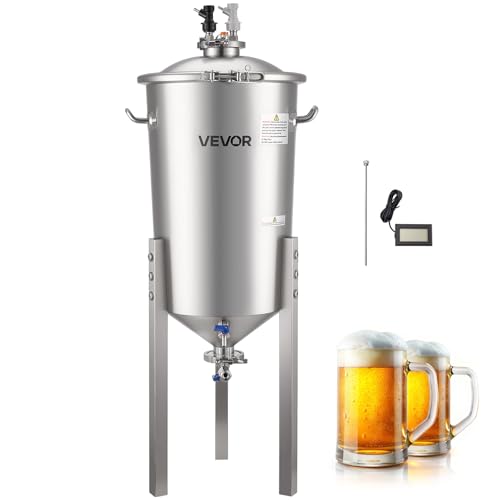
VEVOR Pressure Fermenter 15 PSI (8 gal)
VEVOR
Its 8 gallon capacity and published 15 PSI rating support closed, pressurized transfers straight to a keg, the single biggest reduction in oxygen pickup available at packaging time.
Price last checked at publication and changes often.
What this review is and what it is not
This is not the result of personal hands-on testing, and nobody on this site owns the VEVOR Pressure Fermenter. This review draws on the published manufacturer specification, the listing details for this exact model, and the pattern found across verified owner reviews of pressure fermenters at this price point, and it says so plainly rather than implying a testing process that did not take place.
Pressure vessels are one area where guessing at a figure is genuinely dangerous, not just inaccurate, so this review sticks strictly to the 15 PSI rating and 8 gallon capacity published for this specific listing and does not extrapolate beyond it.
Why pressure fermentation exists as a category
A standard open fermenter, whether a plastic bucket or a glass carboy, vents fermentation gas through a simple airlock and cannot hold internal pressure by design. A pressure fermenter is built with a sealed lid, a pressure relief valve and fittings rated to hold a published pressure, which unlocks closed transfers: moving finished beer out of the fermenter and into a keg using the fermenter's own built-up CO2 pressure to push it, with the receiving keg purged of air first, so the beer never touches open air at all during the move.
That single capability, a fully closed transfer, is the biggest single reduction in oxygen pickup available to a home brewer at packaging time. Racking through an open siphon or pouring beer into a bottling bucket both introduce oxygen at the exact moment the beer is most vulnerable to it, right before it goes into long-term storage. A closed transfer removes that exposure almost entirely, which is the real reason to pay for a pressure fermenter rather than any claim about faster fermentation.
Specifications that matter here
Both published VEVOR pressure fermenters share the same 15 PSI rating; the difference between them is capacity, not pressure tolerance. Fifteen PSI is a real, published limit and it should be treated as a hard ceiling, not a target to approach. A working pressure relief valve is what keeps the vessel inside that rating during active fermentation, when CO2 production can build pressure faster than a brewer watching a gauge might expect.
| Model | Capacity | Pressure rating | Price |
|---|---|---|---|
| VEVOR Pressure Fermenter (8 gal) | 8 gallon | 15 PSI | $193.90 |
| VEVOR Pressure Fermenter (16 gal) | 16 gallon | 15 PSI | $314.50 |
What an 8 gallon capacity actually buys you
An 8 gallon fermenter comfortably holds a standard 5 gallon batch with meaningful headspace left over for foam, or krausen, during active fermentation, which is important in a sealed vessel since that foam has nowhere to escape the way it might vent past an open airlock. Headspace in a pressure fermenter is not wasted capacity, it is part of what keeps a vigorous fermentation from pushing liquid into the pressure relief hardware itself.
This capacity sits between the smaller carboys and buckets sized for a straightforward 5 gallon batch and the larger 16 gallon VEVOR pressure fermenter built for bigger batches or batches with unusually high krausen. For a standard 5 gallon home batch, the 8 gallon size reviewed here is the appropriately sized choice rather than the larger unit.
What owner feedback consistently raises
Verified owner reviews of stainless pressure fermenters at this price point consistently focus on two things: how the pressure relief valve performs under real fermentation conditions, and how the fittings hold a seal over repeated use. Both are worth checking on your specific unit at first use, before you are relying on the vessel for a batch that matters, rather than assuming any sealed vessel behaves identically to another.
- A spunding valve, which lets a brewer dial in and hold a specific pressure rather than simply venting or sealing, is a common companion purchase for pressure fermenting and is often sold separately from the fermenter itself.
- Confirm the fitting type printed on the listing matches whatever gas and liquid connections you already own before ordering, since pressure fermenter fittings are not universal across brands.
Who should buy this, and who should not
Buy this if you already keg your beer and want to eliminate the oxygen exposure that comes with racking to a bottling bucket or an open siphon transfer, or if you are chasing the cleaner, less oxidized flavor profile that closed transfers are associated with in hop-forward styles especially. It is a meaningful step up from a standard conical or bucket fermenter for that specific reason, not because it ferments beer any faster or differently on its own.
Skip it if you do not currently keg, since a pressure fermenter's closed-transfer advantage assumes a sealed, purged keg on the receiving end; without one, you lose most of the benefit and are paying pressure-vessel prices for what functions as an expensive bucket. It is also not the right first fermenter for someone still learning basic sanitation and fermentation fundamentals, since a sealed pressure vessel adds real complexity, and a mistake with a pressure relief valve carries more risk than a mistake with an airlock.
Cleaning a sealed pressure vessel
A pressure fermenter has more fittings, seals and a pressure relief valve compared to a simple bucket, and every one of those extra parts is a place residue can build up if cleaning is rushed. Disassemble the removable fittings according to the manufacturer's instructions before cleaning rather than spraying the whole assembled unit and hoping cleaner reaches every seal. A caustic cleaner such as Five Star PBW (pbw-1lb) at $11.97 followed by a proper sanitizer is the standard approach for stainless fermentation equipment generally, and it applies here the same as on any other stainless vessel.
Check the pressure relief valve specifically as part of a cleaning routine, not just at first use. A valve that has residue or buildup around its seat may not seat or release correctly on the next batch, and that is precisely the component this vessel depends on to stay within its published 15 PSI rating.
What a closed transfer setup needs beyond the fermenter
The fermenter is only one half of a closed transfer. The receiving keg needs to be purged of air beforehand, which typically means a source of CO2 and a way to push gas into the keg before beer arrives, and a length of transfer line connects the two sealed vessels. Budget for those pieces alongside the fermenter itself if closed transfers are the reason you are buying it, since a pressure fermenter without a purged keg on the other end cannot deliver the oxygen-reduction benefit this review is built around.
Why hop-forward beer benefits the most
Oxygen exposure at packaging shows up as a flavor problem faster and more noticeably in hop-forward beer than in a malt-driven style, since hop aroma and flavor compounds degrade with oxidation in a way that reads as a dulling or a cardboard-like staleness developing within weeks rather than months. A brewer chasing bright, fresh hop character in an IPA or a similar style has more to gain from a fully closed transfer than a brewer making a stout or a barleywine that is expected to age and change over time regardless. That is the honest answer to who this equipment serves best: it is not that other styles cannot benefit, it is that hop-forward beer shows the payoff sooner and more clearly.
The three tiers
These are three genuinely different builds, not the same product at three prices. Buy the tier that matches how much you already know you will use it.
U.S. Solid 6.5 Gallon Fermenter with Airlock and Spigot
U.S. Solid
A 6.5 gallon fermenter with airlock and spigot for $47.57 covers standard batches without the added complexity of a sealed, pressure-rated vessel, right for learning fermentation basics first.
$47.57
View on AmazonDiboshi 35L Stainless Conical Fermenter (316)
Diboshi
A stainless conical fermenter for $139.00 without a pressure rating, worth choosing over this VEVOR if you want conical-style trub separation but do not yet keg or need closed transfers.
$139.00
View on AmazonVEVOR Pressure Fermenter 15 PSI (16 gal)
VEVOR
The 16 gallon version at $314.50 shares the same 15 PSI rating but with roughly double the capacity, meant for bigger batches. Skip it if you brew standard 5 gallon batches, since the 8 gallon model reviewed here already fits that volume with appropriate headspace, and the larger unit only adds unused capacity and cost.
$314.50
View on AmazonEverything else worth considering

WELONSTAR 17 Gallon Stainless Conical Fermenter
Wide mouth seventeen gallon stainless conical for beer and wine, with a dump valve for trub and yeast.
Fermtech 6 Gallon Conical Fermenter
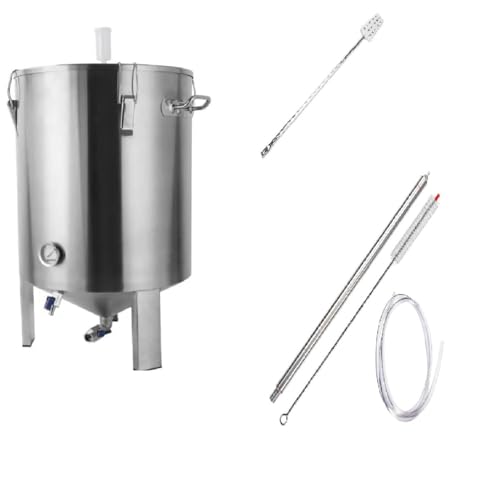
Thirty litre 304 stainless conical supplied with a bottle filler and mash paddle.

VEVOR 8 Gallon Stainless Brew Bucket Fermenter
Flat bottomed stainless fermenter with a sampling valve, easier to clean than a conical.

Fermtech Stainless Steel Auto Siphon (18 inch)
Stainless auto siphon with clip and brush, which survives hot caustic cleaning that would craze plastic.

SPARC Gen2 Premium CO2 Regulator
Single output CO2 keg regulator with a CGA-320 inlet.

Kegco 1 Gallon Pressurized Keg Cleaning Kit
Hand pump pressurised cleaner that pushes no-rinse solution through lines and faucets.
Before you do this
A sealed, pressure-capable fermenter must have a working pressure relief and a published rating that is never exceeded, 15 PSI on this model. Check the relief valve functions before every batch, and treat the rated pressure as a hard limit, not a target.
Related on BrewGearCalc
- Best pressure fermenters
- Pressure fermentation vs open fermentation
- Best fermenters
- Kegging vs bottling
- Best CO2 regulators and tanks
Frequently asked questions
- What does a pressure fermenter actually let you do that a bucket cannot?
- A pressure fermenter has a sealed lid and rated fittings that let it hold internal CO2 pressure, which enables a closed transfer: pushing finished beer directly into a purged, sealed keg using the fermenter's own pressure, with no open-air exposure at all. A standard bucket or carboy vents through an open airlock and cannot do this. Closed transfers are the single biggest reduction in oxygen pickup available at packaging time.
- What is the pressure rating on the VEVOR Pressure Fermenter?
- The published rating for both the 8 gallon and 16 gallon VEVOR Pressure Fermenter listings is 15 PSI. That is a real manufacturer limit, not a target to approach, and it should never be exceeded. A working pressure relief valve is what keeps the vessel within that rating during active fermentation, when CO2 can build pressure faster than expected.
- Do I need a spunding valve with a pressure fermenter?
- A spunding valve is not always included with the fermenter itself and is commonly sold as a separate accessory. It lets a brewer dial in and hold a specific pressure rather than simply sealing the vessel shut or venting it fully open, which gives more control over carbonation building up during fermentation. Check the specific fermenter listing to see whether one is bundled before assuming it comes included.
- Is an 8 gallon pressure fermenter big enough for a 5 gallon batch?
- Yes. An 8 gallon vessel holds a standard 5 gallon batch with meaningful headspace remaining for the foam, or krausen, that builds during active fermentation. That headspace matters more in a sealed pressure vessel than in an open fermenter, since foam has nowhere to escape past a sealed lid the way it can vent past an open airlock.
- Can I use a pressure fermenter without a kegging setup?
- You can ferment in it without kegging, but you lose the main reason to buy one: the closed transfer advantage assumes a purged, sealed keg on the receiving end of the transfer. Without a keg to transfer into, a pressure fermenter functions mostly as an expensive sealed bucket. If you do not currently keg, a standard conical or bucket fermenter is the more efficient purchase.
- What happens if a sealed fermenter has no working pressure relief?
- CO2 produced during active fermentation has to go somewhere, and a sealed vessel with no working relief path can build pressure beyond what the vessel or its fittings are rated to hold, which risks a rupture. This is why a functioning pressure relief valve and a published, respected pressure rating are not optional details on any sealed or pressure-capable fermenter, they are the core safety feature of the entire category.
Researched from published brewing formulas, manufacturer specifications and verified owner reviews. This is general guidance, not professional advice.