Calculator
Strike Water Temperature Calculator
The published strike equation, with tun loss kept separate because it is not part of it.
The 0.2 constant is the ratio of the specific heat of grain to that of water, and it is standard. What the equation does NOT include is your mash tun, which absorbs real heat. A cold cooler can pull several degrees out of a mash in the first minute. The tun loss field above is kept separate on purpose: it is your own measured allowance, not part of the published formula.
The formula
The 0.2 constant is the ratio of the specific heat of grain to that of water, and it is standard. What the equation does NOT include is your mash tun, which absorbs real heat. A cold cooler can pull several degrees out of a mash in the first minute. The tun loss field above is kept separate on purpose: it is your own measured allowance, not part of the published formula.
What rests on a standard and what rests on convention
- Standard The strike equation and the 0.2 specific heat ratio are published.
- Convention Any tun loss allowance is your own system, measured or estimated.
A standard is a published equation, a published constant or a manufacturer specification. A convention is widely repeated brewing practice with no governing document behind it. Both are useful. Confusing one for the other is how a habit ends up being quoted as a fact.
Thermometers and mash tuns
This grid re-orders itself against the numbers you enter above. Prices are those returned when the page was built and change often.

CDN Waterproof Digital Thermometer (4.75 inch stem)
NSF certified waterproof thermometer with a long stem, which reaches into a mash without soaking the housing.

OXO Good Grips Digital Instant Read Thermometer
Fast reading digital thermometer for checking strike and mash temperature.
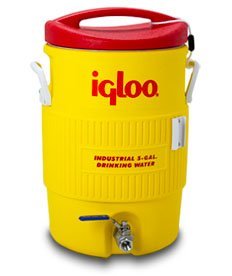
Learn To Brew 10 Gallon Igloo Mash Tun
Insulated cooler mash tun with a stainless false bottom and valve, which holds mash temperature without any power.

Quick Fit 10 Gallon Igloo Mash Tun with Dial Thermometer
Cooler mash tun with stainless false bottom, stainless valve and a three inch dial probe thermometer.

TAPCRAFT Cooler Mash Tun Conversion Kit
False bottom, full port ball valve and gaskets to convert a drinks cooler you already own into a mash tun.
Related on BrewGearCalc
- Strike water temperatures worked out
- Mash and sparge water calculator
- What mash temperature does to your beer
Frequently asked questions
- Why did my mash come in under target?
- Almost always the mash tun. The published equation assumes the vessel absorbs no heat, which no real vessel does. Pre-heat the tun with hot water and dump it just before mashing in, or measure how many degrees you lose once and add that as your tun loss allowance every time afterwards. It is repeatable for a given vessel.
- Does grain temperature matter enough to measure?
- Yes. Grain stored in a cold garage rather than a warm kitchen can shift the required strike temperature by several degrees, which is enough to move a beer from dry and fermentable toward sweet and full bodied. Pushing a thermometer into the middle of the sack takes seconds and removes the largest single cause of missed mash temperatures.
- Should I use a thick or thin mash?
- Anything from roughly 1 to 2 quarts per pound makes good beer. A thicker mash holds temperature more steadily and is associated with more body. A thinner mash is easier to stir and converts marginally better. The ratio also changes the strike temperature, because more water means the water dominates the heat balance.
Researched from published brewing formulas, manufacturer specifications and verified owner reviews. This is general guidance, not professional advice.