Compare
Dry Yeast vs Liquid Yeast
Dry yeast needs no starter for an ordinary strength ale, since a sachet already carries enough viable cells on its own. Published manufacturer specifications put dry yeast viability at a minimum of 6 billion viable cells per gram, so an 11.5 g sachet like Safale US-05 at $8.49 works out to roughly 69 billion viable cells, enough for a typical 5 gallon batch pitched straight from the packet.
A liquid pack is sold at approximately 100 billion cells, a published manufacturer figure of its own, but this catalog does not carry a liquid yeast product, so every strain recommended here is a dry sachet.
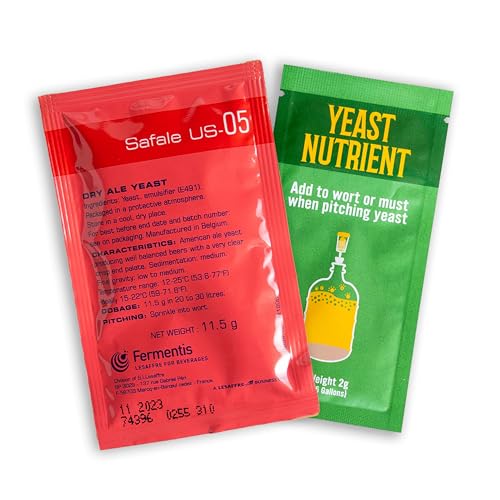
Safale US-05 American Ale Dry Yeast
Craft A Brew
It is a neutral, versatile American ale strain that needs no starter for an ordinary gravity batch and works across more styles than any other dry strain carried in this catalog.
Price last checked at publication and changes often.
The real difference: cell count and whether a starter is needed
An 11.5 g sachet of dry yeast, built on a published minimum of 6 billion viable cells per gram, works out to roughly 69 billion viable cells per sachet, a standard manufacturer specification rather than a rough guess. For an ordinary strength ale in a typical 5 gallon batch, that cell count is enough to pitch directly from the packet with no starter step at all, which is a real, practical advantage for anyone who does not want to manage a separate starter before brew day.
A liquid pack is sold at approximately 100 billion cells, also a published manufacturer figure. That number sounds like more cells outright, and often is at the moment of packaging, but liquid yeast viability declines steadily from its manufacture date in a way dry yeast resists better in its sealed, low-moisture form. For anything beyond a modest gravity beer, a liquid pack is frequently recommended with a starter to reach a targeted pitch rate that its raw cell count alone may not cover reliably.
Pitch rate: a widely used convention, not a fixed law
The common target used to judge whether a packet or pack alone has enough cells, or whether a starter is needed, is built around a pitch rate of roughly 0.75 million cells per milliliter of wort per degree Plato. That figure is a widely repeated convention in home brewing, not a fixed physical law, and different strains and different styles tolerate meaningful deviation from it without a ruined batch.
What the convention captures usefully is that higher gravity wort needs more total cells to hit the same target pitch rate as a lower gravity batch. That is exactly why the same liquid pack that is fine for a modest ale can fall short of the convention's number for a strong beer, while a dry sachet's higher effective cell count relative to its price often still covers an ordinary strength batch without a starter. This site's yeast pitch calculator applies that convention to a specific batch size and gravity to show where a starter genuinely helps.
Why this catalog only carries dry yeast
Every yeast key verified in this catalog's ingredients section is a dry sachet: Safale US-05, Safale S-04, LalBrew Nottingham, LalBrew Voss, and LalBrew New England. There is no liquid strain, no White Labs vial and no Wyeast smack pack, carried here. That is a real, stated limitation for a brewer chasing a specific liquid-only strain character.
For everyone else, modern dry yeast strain selection covers a genuinely wide range of styles well, and the strains stocked here span clean American ale character, English ale character, and specialty strains built for warm fermentation and hazy styles.
Strain-by-strain differences in what's actually stocked here
Safale US-05 is a clean, neutral American ale workhorse that gets out of the way of hop and malt character, which is exactly why it works across more styles than any single-purpose strain. Safale S-04 leans more English in character, ferments and flocculates quickly, and suits malt-forward and traditional ale styles. LalBrew Nottingham is another versatile, fast, clean-fermenting option comparable in role to US-05.
LalBrew Voss is a Kveik strain, a category published for tolerating unusually warm fermentation temperatures without the harsh off-flavors most other strains produce under the same heat, a real published characteristic of the Kveik family rather than a general dry yeast trait. LalBrew New England is marketed specifically for the soft, fruit-forward character associated with hazy and juicy IPA styles, a narrower, style-specific pick rather than a general workhorse.
- Clean, general-purpose ale character: Safale US-05 or LalBrew Nottingham.
- English or malt-forward ale character: Safale S-04.
- Warm fermentation without a temperature controller: LalBrew Voss.
- Deliberately hazy, juicy IPA character: LalBrew New England.
Rehydrating dry yeast versus pitching a liquid pack directly
Most dry yeast manufacturers publish instructions recommending rehydration in plain water at a specified temperature before pitching, though some strains are also labeled safe to pitch dry directly onto wort. Following the specific instructions printed on a given packet, rather than assuming every dry strain handles rehydration the same way, is the correct approach here rather than a single universal rule.
A liquid pack sourced elsewhere generally needs to be brought up to pitching temperature before use and, as covered above, may need a starter built ahead of brew day to reach a target pitch rate for anything beyond a modest gravity beer, an extra planning step dry yeast usually avoids entirely.
Storage and shelf life
A sealed dry yeast sachet stores reasonably well at room temperature but keeps best refrigerated, and its published viable cell count is exactly what the manufacturer's printed best-by reference assumes, not a guarantee that holds indefinitely past that point. Liquid yeast is more perishable overall and needs constant refrigeration to protect its viability between purchase and pitching day.
This difference in shelf stability is part of why dry yeast travels and stores more forgivingly for a home brewer who does not brew on a strict, predictable schedule.
Pitching multiple sachets for a stronger beer
Rather than building a starter, many home brewers scale up a dry yeast pitch for a stronger beer simply by pitching two or more sachets at once, adding total viable cells in direct proportion to the number of packets used. Two sachets of a strain carrying roughly 69 billion viable cells each provide roughly double the total cell count of one, which covers a meaningfully higher gravity batch without the extra equipment or advance planning a starter requires.
This works because dry yeast's cost per sachet is low enough that buying an extra packet for a strong beer is a minor expense, whereas building an equivalent starter from a single liquid pack takes advance planning, sterile technique, and typically a day or more of lead time before brew day.
Flavor character differences that go beyond cell count
Cell count and starter requirements are only part of the decision. Some brewers who work specifically with certain historic or regional styles reach for a liquid strain not carried in this catalog because a particular liquid-only strain produces a specific ester or phenolic profile that the closest available dry strain does not fully replicate. That is a genuine, real difference in some cases, not simply brand preference.
For the great majority of common ale styles, the dry strains stocked here cover the relevant flavor territory well, from clean and neutral to English-leaning to warm-tolerant Kveik character to New England haze-forward fruitiness, which is why dry yeast has become the default choice for most home brewers rather than a compromise against liquid yeast.
How the options compare
| Format | Published cell count | Starter needed for ordinary ale | Storage |
|---|---|---|---|
| Dry sachet (11.5 g, e.g. Safale US-05) | Roughly 69 billion (6 billion per gram, standard spec) | No | Room temperature, best refrigerated |
| Liquid pack (not carried in this catalog) | Approximately 100 billion, standard spec at packaging | Often, for higher gravity beers or per pitch rate target | Refrigerated, perishable |
How we chose
These picks come from published manufacturer viability specifications, strain descriptions, and fermentation temperature ranges, along with verified owner reviews on attenuation and flavor character across batches. This is not the result of personal hands-on brewing with these specific packets. Because no liquid yeast product is a verified key in this catalog, that entire format is described here rather than recommended by name.
The three tiers
These are three genuinely different builds, not the same product at three prices. Buy the tier that matches how much you already know you will use it.
Safale US-05 American Ale Dry Yeast
Craft A Brew
Clean and versatile enough to work across far more styles than a specialty strain, and its published cell count needs no starter for an ordinary strength batch, the easiest first dry yeast choice.
$8.49
View on AmazonLalBrew Voss Kveik Ale Yeast (2 pack)
CAPYBARA Distributors Inc.
A Kveik strain that tolerates warm fermentation without the off-flavors most strains produce under the same heat, a genuine step up in flexibility once a brewer understands the distinct flavor profile that comes with it.
$12.99
View on AmazonLalBrew New England Ale Yeast (2 pack)
CAPYBARA Distributors Inc.
Built specifically for the soft, fruit-forward character behind hazy and juicy IPA styles, best suited to a brewer who has already settled into dry hopping technique and wants that character on purpose. Someone who hasn't picked a house yeast yet, or isn't specifically chasing a hazy IPA profile, should not buy this; US-05 or Nottingham serves clean and malt-forward styles far better.
$13.99
View on AmazonEverything else worth considering

Safale S-04 English Ale Dry Yeast
Fast flocculating English ale strain that drops bright quickly.

LalBrew Nottingham Dry Ale Yeast (2 pack)
Neutral high attenuating ale yeast in 11 g sachets.

Fermentis Safale US-05 (8 pack, 11.5 g)
Eight sachets of US-05, which is the cheapest way to pitch properly on every batch.
Related on BrewGearCalc
Frequently asked questions
- Do I need to make a starter for dry yeast?
- Usually not, for an ordinary strength ale. A standard 11.5 g dry yeast sachet carries a published minimum of 6 billion viable cells per gram, roughly 69 billion cells total, which is enough to pitch directly from the packet for a typical 5 gallon batch. Higher gravity beers, or multiple packets pitched together for a very strong beer, are the situations where a starter becomes more relevant even with dry yeast.
- Does this catalog sell liquid yeast?
- No. Every yeast key verified in this catalog is a dry sachet: Safale US-05, Safale S-04, LalBrew Nottingham, LalBrew Voss, and LalBrew New England. There is no White Labs vial or Wyeast smack pack carried here. A brewer set on a specific liquid-only strain will need to source it from a shop that carries liquid yeast.
- How many cells are actually in a packet of dry yeast?
- Manufacturers publish a minimum viability figure, commonly 6 billion viable cells per gram. An 11.5 g sachet, the standard size for most dry ale strains, works out to roughly 69 billion viable cells at that published minimum. That figure is a manufacturer specification, not a rough estimate, and is what makes pitching a single sachet directly enough for an ordinary strength batch.
- Should I rehydrate dry yeast before pitching it?
- Follow the specific instructions printed on the packet, since manufacturer guidance varies by strain; most recommend rehydrating in plain water at a specified temperature first, while some strains are labeled safe to pitch dry directly onto wort. Treating every dry yeast packet as needing the exact same handling is a common mistake worth avoiding by reading the label each time.
- What makes a Kveik strain different from a regular ale yeast?
- A Kveik strain, such as LalBrew Voss, is published as tolerant of unusually warm fermentation temperatures that would produce harsh, unpleasant off-flavors in most other ale strains. That trait lets a brewer ferment warm without a dedicated temperature controller, though it comes with a distinct flavor character that suits some styles better than others, so it is a deliberate choice rather than a universal upgrade.
- Is buying an 8-pack of dry yeast worth it?
- It depends on how often you brew. A bulk multi-pack of a versatile workhorse strain like Safale US-05 lowers the per-sachet cost for someone brewing frequently and reusing the same strain across many batches. For someone brewing only a handful of times a year, buying single sachets as needed avoids tying up money in packets that may sit unused for a long stretch.
Researched from published brewing formulas, manufacturer specifications and verified owner reviews. This is general guidance, not professional advice.