Calculator
Yeast Pitch Rate and Starter Calculator
Pitch rates are convention, not standard. This calculator says so on the page.
The arithmetic is standard and the published cell count per pack is a real manufacturer specification. The pitch rate is NOT a standard: 0.75 million cells per millilitre per degree Plato for ales, and double that for lagers, are conventions. They are widely repeated and they work, but no governing document defines them. The viability decline of about a fifth per month is likewise an estimate rather than a specification.
The formula
The arithmetic is standard and the published cell count per pack is a real manufacturer specification. The pitch rate is NOT a standard: 0.75 million cells per millilitre per degree Plato for ales, and double that for lagers, are conventions. They are widely repeated and they work, but no governing document defines them. The viability decline of about a fifth per month is likewise an estimate rather than a specification.
What rests on a standard and what rests on convention
- Standard Manufacturer cell counts per pack, and the arithmetic.
- Convention The pitch rates themselves and the monthly viability decline.
A standard is a published equation, a published constant or a manufacturer specification. A convention is widely repeated brewing practice with no governing document behind it. Both are useful. Confusing one for the other is how a habit ends up being quoted as a fact.
Yeast and starter equipment
This grid re-orders itself against the numbers you enter above. Prices are those returned when the page was built and change often.
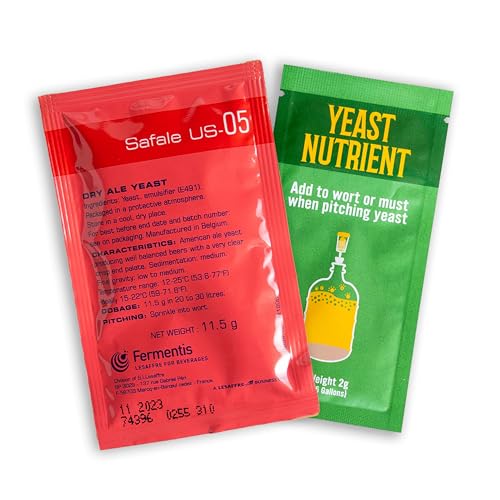
Safale US-05 American Ale Dry Yeast
The default clean American ale strain. Dry yeast needs no starter, which removes a whole step for a first all-grain batch.

Safale S-04 English Ale Dry Yeast
Fast flocculating English ale strain that drops bright quickly.

Fermentis Safale US-05 (8 pack, 11.5 g)
Eight sachets of US-05, which is the cheapest way to pitch properly on every batch.

LalBrew Nottingham Dry Ale Yeast (2 pack)
Neutral high attenuating ale yeast in 11 g sachets.

LalBrew Voss Kveik Ale Yeast (2 pack)
Kveik strain that ferments cleanly at high temperatures, which removes the need for a fermentation chamber in a warm house.

LalBrew New England Ale Yeast (2 pack)
Hazy ale strain for New England style IPAs.

Northern Brewer Maelstrom Stir Plate
Stir plate with stir bar for yeast propagation, which grows a liquid pack up to a correct pitch.
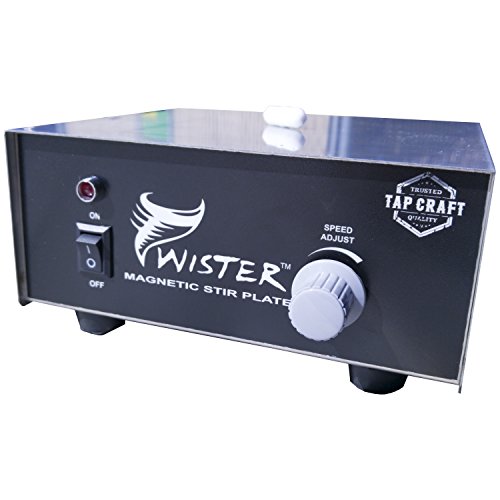
Tapcraft Twister Stainless Magnetic Stir Plate
Seven inch stainless stir plate sized for a two litre starter flask.

Stir Starter Magnetic Yeast Starter Plate
Purpose built yeast starter stir plate with no heating element.

JOANLAB MS5 Magnetic Stirrer
Entry level unheated magnetic stirrer for yeast starters.
Related on BrewGearCalc
Frequently asked questions
- Is the 0.75 million cells pitch rate a published standard?
- No, and it is worth being clear about that because most sites present it as if it were. It is a convention: widely repeated, effective in practice, and not defined by any governing document. The published figures in this calculation are the manufacturer cell counts per pack, which is why the page labels the two differently.
- When do I actually need a starter?
- When the viable cells you have fall short of what the batch needs. That happens with higher gravity worts, larger batches, lagers, which conventionally take double the ale rate, and liquid yeast that has aged in storage. Dry yeast sidesteps the question for most ordinary strength ales, because a sachet already carries enough cells to pitch directly.
- What happens if I under-pitch?
- The yeast has to grow more before it can ferment, which stresses it and lengthens the lag before visible activity. The usual consequences are more fruity ester character, a greater chance of the fermentation finishing high, and occasionally a stuck fermentation. Over-pitching is a much less common problem and generally produces a cleaner but less expressive beer.
Researched from published brewing formulas, manufacturer specifications and verified owner reviews. This is general guidance, not professional advice.