Guides
How to Make a Yeast Starter
A liquid yeast pack ships with roughly 100 billion cells, a published manufacturer specification, and a 1 to 2 liter starter built from about 100 to 200 grams of dry malt extract per liter of water grows that pack toward the size a normal 5-gallon batch actually needs.
The 10-percent DME solution used for that starter is a long-standing home-brewing convention, not a number any yeast lab publishes.
Why a starter exists at all
A fresh liquid yeast pack is sold as roughly 100 billion cells. That figure is a manufacturer specification, printed on the packaging, and it is a real number rather than a rule of thumb. The trouble is that a normal 5-gallon batch at a normal gravity often needs more cells than a single pack provides, and the gap gets worse as the beer gets stronger or as the pack sits in a fridge past its production date.
A starter closes that gap without buying two or three packs of yeast. It is a small batch of thin, low-gravity wort, usually made from dry malt extract and water, that the yeast ferments out over a day or two while multiplying. By the time it is done, the flask holds a much larger, healthier population than the pack you started with, ready to pitch into the real batch on brew day.
What goes into a basic starter
The ingredients are deliberately simple: light dry malt extract, water, a flask or heat-safe jar bigger than the volume you are making, and a way to sanitize everything that touches the wort after it cools. Some brewers add a small amount of yeast nutrient, which supplies trace minerals the yeast use during rapid growth, though it is optional for an ordinary starter rather than something every batch requires.
Boil the DME solution briefly the same way you would a batch of wort, since it is unfermented sugar water and carries the same contamination risk as any other wort. Cool it, pitch the yeast pack once it is at room temperature, and cover the flask loosely with sanitized foil so gas can escape but airborne contaminants mostly cannot get in.
- A flask or jar sized at least double the starter volume, so there is room for foam
- Light or extra-light dry malt extract, weighed rather than scooped by volume
- Sanitized foil or a loose-fitting lid, never a sealed cap
- A way to cool the wort to room temperature before pitching
Getting oxygen into the starter wort
Yeast use dissolved oxygen early on to build cell membranes as they reproduce, and a starter is exactly the stage where that reproduction matters most. Once the DME wort has cooled to room temperature, giving it a vigorous shake, a shot of pure oxygen if you have the equipment, or simply letting a stir plate agitate it hard for the first hour or two, all help dissolve more oxygen into the wort before the yeast really gets going.
This step gets skipped more often than it should, since it is easy to focus on temperature and forget aeration entirely. A starter that never gets aerated will still ferment, but the growth is usually slower and less complete than one that got a proper shake or a spin on the plate before the yeast was pitched.
Stirring, shaking or leaving it still
A magnetic stir plate keeps the yeast in constant, gentle motion and exposes more of the wort surface to air the whole time the starter runs. Brewers who use one consistently report a more even, more vigorous starter than one left completely still, since motion keeps yeast in suspension where it can feed rather than settling to the bottom early.
A stir plate is not required. Swirling the flask by hand every few hours, especially right after pitching, gets some of the same benefit without the equipment. It takes more attention and gives less consistent results than a plate running continuously overnight, but plenty of good starters are made with nothing more than a clean hand and a habit of walking past the counter.
Sizing a starter for your batch
How many cells a starter actually needs to produce depends on your batch volume, your target gravity, and whether you are pitching an ale or a lager rate, since those targets scale together. Rather than guess, a pitch rate calculator that takes those inputs will tell you the starter size and whether a single-step starter is enough or whether a bigger beer calls for a stepped starter built in two stages.
In practice, most home brewers reach for one of a handful of common volumes: a 1-liter starter for a modest top-up, a 2-liter starter for a fairly standard 5-gallon ale, and a stepped 4-liter starter, built as two 2-liter stages with the first one decanted before the second is added, for bigger or lager-strength beers where a single flask cannot hold enough wort to get there in one pass.
| Starter volume | DME needed | Approximate gravity |
|---|---|---|
| 1 liter | 100 g | about 1.036 |
| 1.5 liters | 150 g | about 1.036 |
| 2 liters | 200 g | about 1.036 |
| 4 liters, stepped as two 2-liter stages | 400 g total | about 1.036 per stage |
When you can skip the starter entirely
Dry yeast plays by different rules. An 11.5 gram sachet is commonly specified at a minimum of 6 billion viable cells per gram, which works out to roughly 69 billion cells in that one packet, a real manufacturer specification rather than an estimate. For an ordinary-strength ale, that is generally treated as enough to pitch directly, without building a starter first.
Manufacturers typically recommend rehydrating dry yeast in plain water rather than growing it in a sugary wort starter, since throwing a dried, dormant strain straight into fermentable sugar during the early rehydration window can work against it. If a bigger or higher-gravity beer needs more cells than one sachet provides, the usual fix is a second sachet or careful rehydration of more yeast, not a wort-based starter.
Crash cooling a starter before brew day
Once a starter has finished fermenting, usually within a day or two, putting the flask in a fridge for a day lets the yeast settle into a compact layer at the bottom, with the thin, spent starter wort sitting clear on top. That settled layer is the useful part: a dense, healthy slurry that is easy to decant and pitch.
Pulling the starter out of the fridge a few hours before brew day and letting it warm back toward room temperature, with a swirl to resuspend the yeast, avoids shocking a cold slurry straight into warm wort. It is a small step, but it keeps the temperature swing the yeast experiences on pitching day much gentler than it would be otherwise.
Cleaning up and common problems
Starter flasks pick up a thin baked-on film of fermented wort that plain hot water will not fully remove, and a caustic cleaner like PBW is the standard fix, soaked overnight and then rinsed clean. PBW and similar alkaline cleaners will burn skin and eyes on contact, so gloves and eye protection are worth the ten seconds it takes to put them on, and PBW should never be mixed with an acid sanitiser like Star San in the same container.
A starter that shows no visible krausen is not automatically a dead one, since growth in a small volume of thin wort is often much less dramatic than a full batch fermenting. Swirl it, smell it for anything sour or solvent-like, and if it still looks and smells clean, most brewers pitch it rather than discarding a perfectly good pack of yeast over a quiet flask.
Everything else worth considering

Northern Brewer Maelstrom Stir Plate
Stir plate with stir bar for yeast propagation, which grows a liquid pack up to a correct pitch.
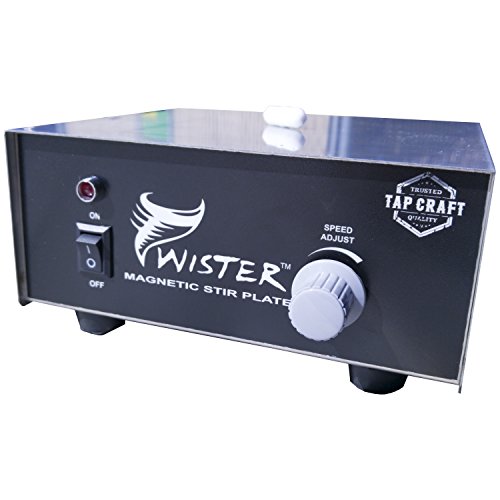
Tapcraft Twister Stainless Magnetic Stir Plate
Seven inch stainless stir plate sized for a two litre starter flask.

Stir Starter Magnetic Yeast Starter Plate
Purpose built yeast starter stir plate with no heating element.

JOANLAB MS5 Magnetic Stirrer
Entry level unheated magnetic stirrer for yeast starters.

Digital Pocket Scale 200 g x 0.01 g
Hundredth of a gram resolution, which is the precision hop additions and water salts actually need.

BOMATA 1 kg x 0.01 g Digital Scale
Wider range 0.01 g scale, which covers both salt additions and whole hop packets.
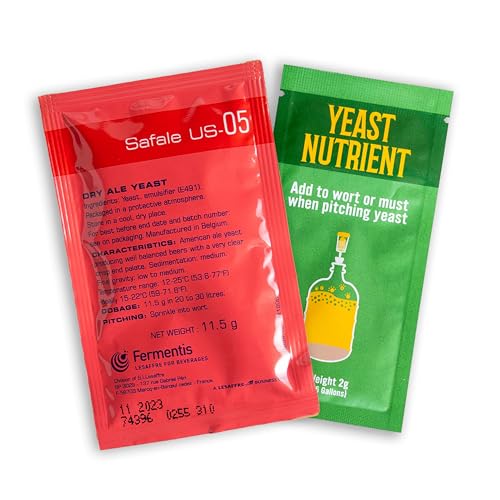
Safale US-05 American Ale Dry Yeast
The default clean American ale strain. Dry yeast needs no starter, which removes a whole step for a first all-grain batch.

LalBrew Nottingham Dry Ale Yeast (2 pack)
Neutral high attenuating ale yeast in 11 g sachets.
Before you do this
Starter flasks pick up baked-on wort residue that plain water will not remove, and a caustic cleaner like PBW is the standard fix. PBW and similar alkaline cleaners burn skin and eyes on contact, so wear gloves and eye protection, and never mix PBW with an acid-based sanitiser like Star San in the same container.
Related on BrewGearCalc
- Yeast pitch rate calculator
- Yeast pitch reference
- How much yeast to pitch
- Fermentation temperature control
Frequently asked questions
- Do I need a stir plate to make a yeast starter?
- No. A stir plate keeps yeast in suspension and gently exposed to air the whole time it runs, which most brewers find grows a larger, more even population than a starter left completely still. Swirling the flask by hand every few hours works too, it just takes more attention and gives less consistent results. If you brew often enough to justify one, a magnetic stir plate is a one-time purchase that removes the guesswork of remembering to shake the flask.
- How far ahead of brew day should I start it?
- Most home brewers start a liquid starter 1 to 3 days ahead, since the starter wort itself usually finishes fermenting within 24 to 48 hours, and the yeast then needs some settling time before you decant it. Starting further ahead just means refrigerating the finished starter until brew day, then letting it warm up and swirling the yeast back into suspension before pitching it into the real batch.
- Can dry yeast be used in a starter?
- It can, but it usually is not necessary. An 11.5 gram sachet of dry yeast already carries roughly 69 billion viable cells by manufacturer specification, enough for an ordinary-strength ale without growing it further. Manufacturers generally recommend rehydrating dry yeast in plain water rather than building it up in a sugary wort starter, since the early stress of budding in wort can work against a strain that was dried and packaged to be pitched directly.
- What if my starter shows no visible fermentation?
- A quiet starter is not automatically a dead one. Cell growth in a small volume of thin wort is often much less dramatic than in a full batch, especially in a stepped or cold-conditioned starter, so a thin krausen or none at all does not always mean failure. Swirl it, smell it for anything sour or off, and if it still looks and smells clean, most brewers pitch it anyway rather than discard a pack of yeast on appearance alone.
- Do I need to decant the spent starter wort before pitching?
- Decanting is common practice once the yeast has settled, since pouring off the thin, already-fermented starter wort and pitching just the yeast slurry avoids adding extra unfermented sugar and a faintly sour smell to the beer. It is not mandatory. Some brewers pitch the whole starter, wort included, particularly with smaller starters where that volume is small relative to the batch, and it makes little practical difference to the finished beer.
- What size starter does a high-gravity beer need?
- It depends on the batch volume, the target gravity, and whether you are building an ale or a lager pitch, since lagers are conventionally pitched at roughly double the ale rate. Rather than guess, use a pitch rate calculator that takes your gravity and volume and returns a starter size and step-up plan, because one flat starter size does not scale correctly from a session beer up to a big barleywine.
Researched from published brewing formulas, manufacturer specifications and verified owner reviews. This is general guidance, not professional advice.