Guides
Cleaning vs Sanitising: They Are Not the Same Job
PBW is an alkaline cleaner that lifts soil, protein film, and beerstone off a surface, while Star San is an acid sanitiser that only reduces microbes on a surface that is already clean, so spraying sanitiser onto visible grime skips the step that actually matters.
Five Star's published label directions call for real PBW contact time, often 20 to 30 minutes on routine soil, before a water rinse, followed by a fresh Star San solution at its standard label dilution that needs no rinse afterward.
Two different jobs, two different chemistries
New brewers often treat "clean" and "sanitary" as the same word, and it is an easy mistake to make since both steps happen right before you fill a fermenter or bottle. They are not the same job. Cleaning removes visible and invisible soil, things like dried wort, yeast film, hop residue, and the thin mineral layer called beerstone that builds up inside a carboy or keg over time. Sanitising is a separate step that reduces the population of microbes living on a surface, and it is only validated to work on a surface that has nothing left for microbes to hide inside or feed on.
This is why "I sanitised it and it still infected" is almost always a cleaning problem wearing a sanitising complaint. A sanitiser like Star San is tested and labeled for use on a visibly clean surface. Spray it onto a carboy with a film of old trub or a bucket lid with dried krausen still stuck to it, and the sanitiser is working through a layer of organic material instead of touching the plastic or glass underneath, which is exactly where an infection can survive.
- Clean first, with a real alkaline or oxygen-based cleaner and enough contact time to lift the soil
- Rinse thoroughly with water so no cleaner residue remains
- Sanitise last, on the now-visibly-clean surface, right before it touches wort or beer
- A no-rinse acid sanitiser like Star San does not need a water rinse afterward, rinsing it off would undo the point
What each product actually does
PBW, short for Powdered Brewery Wash, is an alkaline, oxygen-based cleaner built to break down organic soil without scratching stainless steel or most plastics the way an abrasive scrub pad would. It works through soaking time and mild heat more than scrubbing, which is why label directions call for a real soak rather than a quick spray and wipe. PBW is not gentle on everything, though: extended soaking can dull or etch aluminum and can cloud glass over repeated long soaks, so it is best used with a shorter contact time and a prompt rinse on those materials rather than an overnight soak by default.
Star San is an acid sanitiser built around phosphoric acid, diluted to a low pH where most microbes cannot survive contact. Its defining feature for a home brewer is that it needs no rinse: once mixed at the correct dilution, a brief contact time on an already clean surface is enough, and any solution left clinging to the surface or dripping off does not need to be rinsed away before use. One Step is a different formulation sold as a combined no-rinse cleaner and sanitiser, which some brewers use for lighter routine cleaning between batches, though it is not a substitute for PBW on genuinely dirty or stained equipment.
Why sanitiser foam is not a problem
Star San foams heavily when it is agitated, shaken in a spray bottle, or run through a pump, and new brewers sometimes worry that foam means something has gone wrong or that the foam itself needs to be rinsed away. Neither is true. The foaming is simply a property of the acid solution at its working dilution, and foam left on a surface is still doing its job, since the same low pH that reduces microbes in the liquid is present in the foam. There is nothing to rinse, because rinsing would only reintroduce whatever is in your rinse water onto a surface that no longer needs anything added to it.
Saniclean, also made by Five Star, is the low-foaming version of the same acid-sanitiser idea. It exists specifically for situations where foam is a practical problem rather than a cosmetic one, most often when recirculating sanitiser through a pump, through beer lines, or through a plate chiller, where heavy foam can cause air lock or uneven contact inside narrow tubing. For a simple carboy or bucket, Star San foam is not something to solve.
The order that actually works
Put simply: soil comes off first, then microbes get reduced on what is left. Running the steps in the other order, sanitising a dirty surface and calling it done, is the single most common reason a "sanitised" piece of equipment still causes problems.
| Job | What it removes | Typical product | Contact time | Rinse needed |
|---|---|---|---|---|
| Cleaning | Soil, protein film, beerstone | PBW (alkaline) | Often 20 to 30 minutes, longer for heavy soil | Yes, always rinse cleaner off |
| Sanitising | Microbes on an already clean surface | Star San (acid) | Brief contact at label dilution | No, Star San is no-rinse |
| Sanitising (low foam) | Microbes, in pumps and lines | Saniclean (acid) | Brief contact at label dilution | No, also no-rinse |
Common mistakes beginners make
A few habits explain most of the "I sanitised everything and still got an infection" stories that show up in brewing forums, and none of them require buying different products, just using the products you already have in the right order.
- Spraying Star San onto a visibly dirty carboy and treating it as sanitised because the bottle says no-rinse
- Not giving PBW enough contact time on stuck-on soil, then rinsing away a cleaner that never finished its job
- Letting PBW solution dry onto a surface instead of rinsing it while still wet, which leaves a residue behind
- Assuming heavy Star San foam is a sign something is wrong, then rinsing it off and removing the protection it was providing
- Skipping cleaning altogether on gear that "looks fine," when beerstone and biofilm are not always visible to the eye
Mechanical scrubbing still has a place
Chemistry does most of the work in a modern cleaning routine, but a dedicated brush still matters for spots a soak alone will not reach, like the shoulder of a carboy, the inside of an airlock, or the threads on a bottle. A long carboy brush lets you reach the bottom of a narrow-neck fermenter without straining, while a smaller brush set handles airlocks, bottle interiors, and other small parts that a single large brush cannot get into.
Mechanical scrubbing works best as a follow-up to a PBW soak rather than a replacement for one. Soaking loosens soil chemically first, which means the brush is finishing a job the cleaner already softened rather than trying to scrape off dried, hardened residue from a surface that never got proper contact time. Doing it in that order also protects glass and plastic from unnecessary scratching, since less physical force is needed once the soil has already been loosened.
"It looks clean" is not the same as "it is clean"
Beerstone and biofilm are not always visible to the eye, especially on the inside of a carboy neck or under a keg gasket where lighting is poor and a quick glance is easy to mistake for a real inspection. Equipment that has been rinsed with plain water after every use but never given a real PBW soak can build up a thin residue over several batches that looks fine from a distance but still gives a sanitiser less than a fully clean surface to work with.
A simple habit closes this gap: run a real PBW cycle on fermenters, kegs, and other reusable vessels on a regular schedule, not only when something visibly looks dirty. Bottles and other equipment that will be reused many times over a brewing career benefit the most from this, since biofilm has more opportunities to build up in gear that gets used every few weeks for years rather than gear that is used once and discarded.
How this fits into the rest of your process
Cleaning and sanitising are the last line of defense before wort or beer meets anything other than the inside of a sealed bottle, and getting the order right matters more than which specific brand you use. It also connects directly to fermentation troubleshooting: an off flavor that reads as sour, plasticky, or otherwise wrong is worth checking against your cleaning routine before assuming it is a recipe or process problem elsewhere.
Everything else worth considering
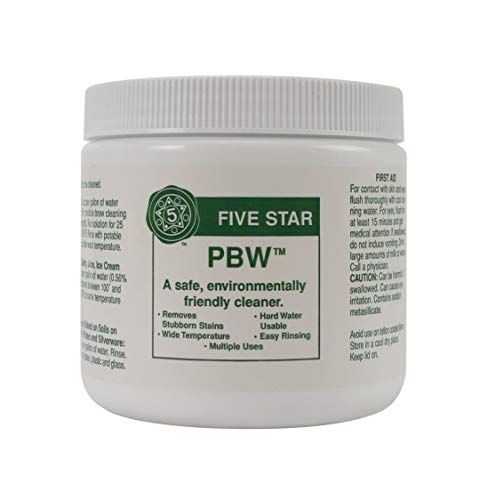
Five Star PBW (1 lb)
Non-caustic alkaline brewery wash that lifts baked-on trub without scrubbing. It is still an alkaline cleaner and needs gloves and eye protection.

Five Star PBW Cleanser (4 lb)
The four pound tub, which is the sensible size once you are brewing regularly.

Five Star PBW Tablets (12 count)
One tablet per gallon, which removes the weighing step for growlers, carboys and kegs.

Five Star PBW Liquid (32 oz)
Liquid PBW, which dissolves instantly instead of needing warm water to go into solution.
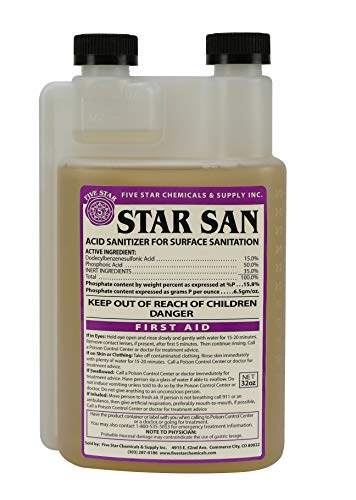
Five Star Star San (32 oz)
High foaming no-rinse acid sanitiser. One ounce treats five gallons, so a single bottle lasts most brewers a very long time.

Five Star Star San (1 gallon)
Gallon of food grade acid sanitiser, sensible only for brewers running kegs and multiple fermenters.

Star San 32 oz and PBW 1 lb Bundle
The cleaner and the sanitiser together, which is the pair every brewer needs and beginners often confuse.

FastRack One Step No Rinse Cleaner (1 lb)
Oxygen based no-rinse cleanser, a gentler alternative to caustic washes.
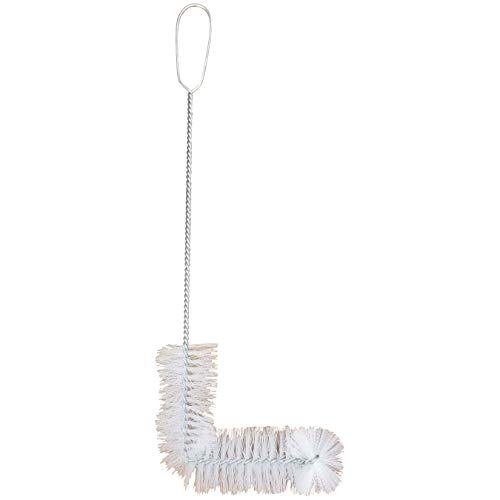
Tapcraft 26 inch Carboy Brush
Long brush that reaches the shoulders of a carboy where krausen dries hardest.

Carboy, Airlock and Bottle Brush Bundle
Three brushes covering the three things that actually need scrubbing.
Before you do this
PBW and similar alkaline cleaners can burn skin and eyes on contact, so wear gloves and eye protection when mixing or handling concentrated solution. Never mix PBW and Star San together: combining a caustic cleaner with an acid sanitiser can react and splashes, and it ruins the effectiveness of both. Store them separately and label containers clearly.
Related on BrewGearCalc
Frequently asked questions
- Can I just use Star San as a cleaner and skip PBW?
- No. Star San is an acid sanitiser, not a cleaner, and it is not built or labeled to remove soil, protein film, or beerstone. It reduces microbes on a surface that is already clean. Spraying it onto dirty equipment leaves the actual soil in place, which is exactly where contamination can survive, so a real cleaning step with something like PBW still has to happen first.
- Do I need to rinse Star San off before I use my equipment?
- No, Star San is a no-rinse sanitiser when mixed at its correct label dilution. Any solution or foam left on the surface is still at the low pH that reduces microbes, and adding a rinse would only reintroduce whatever is in your rinse water. Rinsing is only necessary for cleaners like PBW, which need to be washed away after they have done their job.
- Is it safe to soak my fermenter in PBW overnight?
- Generally yes on stainless steel, glass, and most food-grade plastics, which is why overnight soaks are common for heavy beerstone or dried-on residue. Aluminum is the exception: extended PBW contact can dull or etch aluminum surfaces, so shorter contact time and a prompt rinse are the safer approach there rather than an overnight soak by default.
- My equipment still looks dirty after a PBW soak, what now?
- Give it another round with fresh solution, hotter water if your vessel allows it, and longer contact time, then follow up with mechanical scrubbing using a dedicated carboy or bottle brush on any spots that remain. Stubborn beerstone sometimes needs more than one pass, and that is normal for equipment that has gone a while between real cleanings rather than a sign PBW is not working.
- Can I mix PBW and Star San together to save a step?
- No, never mix them. PBW is alkaline and Star San is acid, and combining a caustic cleaner with an acid sanitiser can react, splash, and neutralize the effectiveness of both. They also need to be used at different points in the process for different reasons. Keep them stored separately, clearly labeled, and used one after the other with a water rinse in between.
- How do I actually know sanitising worked?
- A home brewer cannot verify sanitising with lab testing, so the practical standard is following the label dilution and contact time on a surface that is genuinely, visibly clean beforehand. That combination, real cleaning followed by correct sanitiser use, is what the whole home brewing process relies on, and it is far more reliable than assuming a sanitiser can compensate for a surface that was never properly cleaned.
Researched from published brewing formulas, manufacturer specifications and verified owner reviews. This is general guidance, not professional advice.