Compare
Electric vs Propane Brewing
Electric brewing is the safer and more flexible choice for most home brewers, since a propane burner produces carbon monoxide and must never run in a garage, basement or any enclosed space, while an electric system like the VEVOR 8 Gallon Home Beer Brewer at $149.90 can run safely indoors.
Propane still has a place for a brewer who already owns a burner and always brews outdoors, since a burner like the Concord 12 inch Block Burner at $39.98 is one of the cheapest ways to get serious heat output for a boil.

VEVOR 8 Gallon Home Beer Brewer (1500W)
VEVOR
At $149.90 it delivers 1500W of electric heat that can be used safely indoors, removing the carbon monoxide risk that a propane burner carries no matter how careful the brewer is.
Price last checked at publication and changes often.
The safety case comes first
Propane burners work by burning fuel, and burning fuel indoors produces carbon monoxide, an odorless gas that displaces oxygen and can be lethal in an enclosed space. This is not a minor caveat: a propane burner belongs outdoors only, never in a garage with the door cracked, never in a basement, and never in any space without constant fresh air moving through it. Electric systems have no combustion at all, which is the single strongest practical argument for choosing electric over propane for anyone who brews somewhere other than open outdoor space.
This is also the reason electric brewing has grown so much in home brewing generally. A brewer in an apartment, a brewer in a cold or wet climate, or a brewer who simply does not want to stand outside during a boil can run an electric all-in-one system on a kitchen counter or in a garage with the door open, something that is never safe with an open propane flame.
What propane still does well
Propane burners bring raw heat output that is hard to match electrically without a dedicated high-amperage circuit. The COOKAMP High Pressure Banjo Burner in this catalog is rated at 260,000 BTU, and the Concord Deluxe Banjo Propane Burner is rated at 200,000 BTU, both of which bring a full kettle to a boil quickly outdoors. A brewer with an existing outdoor brewing setup, a turkey fryer style stand, and a habit of always brewing outside has little reason to switch away from propane on heat output alone.
Propane equipment is also often cheaper up front for the burner itself. The Concord 12 inch Block Burner is $39.98 and the Concord Prairie 16 inch Banjo Jr Burner is $54.98, both well under the price of most electric all-in-one systems, though a propane brewer still needs a separate kettle and mash tun to go with it.
Propane also does not depend on household electrical capacity at all. A brewer whose home wiring cannot support a high-wattage electric brewing element, or who is brewing somewhere without reliable electrical access such as a rural property or a campsite, can still run a full-size propane boil as long as they stay outdoors in open air.
How the two compare
| Approach | Example product | Price | Where it can be used |
|---|---|---|---|
| Electric | VEVOR 8 Gallon Home Beer Brewer (1500W) | $149.90 | Indoors or outdoors |
| Electric | BrewZilla Gen 4 (110V, with pump) | $599.99 | Indoors or outdoors |
| Propane | Concord 12 inch Block Burner (100,000 BTU) | $39.98 | Outdoors only |
| Propane | COOKAMP High Pressure Banjo Burner (260,000 BTU) | $105.99 | Outdoors only |
Cost beyond the burner itself
An electric all-in-one system folds the heat source, the vessel and often a pump into one purchase, which is why prices in this catalog for all-in-one systems run from $149.90 up to $599.99 depending on capacity and features. A propane setup needs the burner plus a separate kettle, and typically a separate mash tun as well if going three vessel, which adds up even though each individual piece looks cheap.
Ongoing cost differs too, though this site will not put a number on electricity versus propane fuel cost since that depends on local utility rates and how often a reader brews, both of which vary too much to state as a single figure.
Weather and climate matter more than brewers expect
Propane brewing ties a brewer to the outdoors regardless of weather, which becomes a real limitation in cold, wet or windy conditions. Wind alone can blow a propane flame around badly enough to slow a boil or extinguish it, and cold weather extends the time it takes to bring a large kettle up to strike or boiling temperature. Electric brewing indoors sidesteps all of this, since the mash and boil temperature depend on the controller, not on ambient outdoor conditions.
A brewer in a climate with a long stretch of cold weather each year, or one who simply wants to brew on a schedule rather than around the weather forecast, gets a practical, everyday benefit from electric brewing that has nothing to do with safety and everything to do with convenience.
The carbon monoxide risk in plain terms
It bears repeating in the body of this comparison, not just as a closing note: a propane burner burns fuel, and burning fuel indoors or in any enclosed space produces carbon monoxide, a gas with no smell and no color that can be lethal well before a person notices anything is wrong. This is not a risk that scales down with a smaller burner or a shorter brew session. There is no safe way to run an open propane flame in a garage with the door mostly closed, in a basement, in a shed, or in any space that does not have constant, genuine airflow to the outside.
This single fact is the strongest practical argument for choosing electric over propane. An electric all-in-one system has no combustion at all, so there is no carbon monoxide to manage in the first place, which removes an entire category of risk that a propane brewer has to actively think about on every single brew day, indoors or out.
What each choice locks you into
Choosing electric locks a brewer into whatever their home's wiring supports, which caps how much wattage, and therefore how fast a large batch heats, without an electrician upgrading the circuit. Choosing propane locks a brewer into brewing outdoors, permanently, regardless of the season, which some brewers are perfectly happy with and others find limits how often they actually get a batch on.
Control and temperature precision
Electric systems in this catalog typically pair the element with a digital controller, which holds a mash temperature steady across a rest without a brewer adjusting a flame by hand. That precision matters most during the mash, where a few degrees off target changes how fermentable the resulting wort ends up, based on published mash chemistry.
Propane gives a brewer direct, immediate control over flame size, which some experienced brewers prefer for the boil specifically, since a rolling boil is easier to dial in by eye with a visible flame than by trusting a wattage rating alone. That said, a separate temperature controller, such as the Inkbird ITC-308, can be added to a propane-heated three vessel setup to bring similar precision to the mash stage even when the heat source itself is propane.
Setting up either system safely
An electric system still has real electrical safety considerations, even without combustion. Check the voltage and amperage a specific listing requires against your home's wiring, since higher-wattage all-in-one systems can call for a dedicated circuit rather than a shared household outlet. Keep any electrical connections away from water and never brew with a frayed cord or a damaged plug.
A propane setup needs its own setup checklist regardless of household wiring: a stable, level surface for the burner and kettle, a fire extinguisher within reach, and a clear space around the flame free of anything flammable. None of this replaces the core rule that a propane burner only runs outdoors, in open air, never in a garage, shed, basement or any space without constant airflow.
Who should choose which
- Choose electric if you ever brew indoors, in a garage with the door closed, or anywhere air does not move freely.
- Choose electric if you want the heat source and vessel combined into one purchase.
- Choose propane only if you always brew outdoors and already have, or want, high BTU output for large batch boils.
- Never run a propane burner in a garage, basement or any enclosed space, regardless of how briefly.
How we chose
The prices and BTU figures above come directly from the published listings in this catalog. The safety guidance on propane and carbon monoxide reflects widely known combustion safety, not a claim this site tested airflow or gas levels itself.
The three tiers
These are three genuinely different builds, not the same product at three prices. Buy the tier that matches how much you already know you will use it.
VEVOR 8 Gallon Home Beer Brewer (1500W)
VEVOR
At $149.90 with 1500W of electric heat, this is the cheapest way to brew safely indoors or out, and a straightforward first all-in-one purchase.
$149.90
View on AmazonBrewer's Edge Mash & Boil Series 2 with Pump
Brewers Edge
At $437.56, this adds a pump for recirculation while staying fully electric, which suits a brewer ready to move past a basic no-frills unit without taking on any combustion risk.
$437.56
View on AmazonBrewZilla Gen 4 (35L, 110V, with pump)
Kegland
At $599.99 with a pump included, this is the highest-spec electric option in this comparison. A brewer who is happy with a simpler electric unit, or who genuinely only ever brews outdoors and wants propane's heat output instead, should not pay this premium.
$599.99
View on AmazonEverything else worth considering

Concord Prairie 16 inch Banjo Jr Burner
Smaller single banjo burner with stand, suited to five gallon outdoor batches.
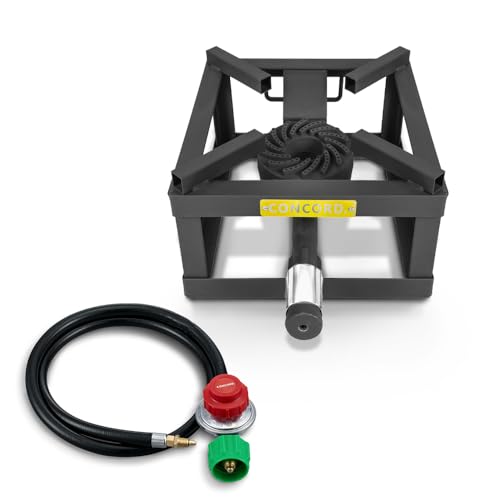
Concord 12 inch Block Burner (100,000 BTU)
Compact single propane burner for outdoor brewing.
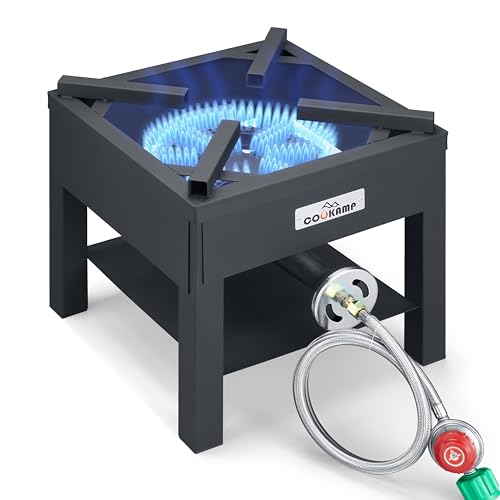
COOKAMP High Pressure Banjo Burner (260,000 BTU)
Very high output banjo burner with a 0 to 30 psi adjustable regulator.
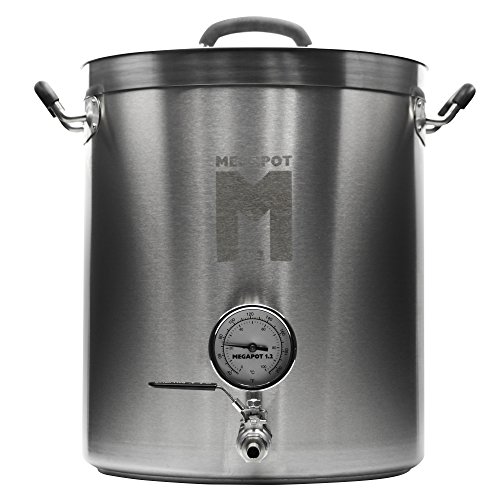
Northern Brewer MegaPot 10 Gallon (valve and thermometer)
Heavy stainless kettle with volume markings, a ball valve and a fitted thermometer, for propane or electric element brewing.

Inkbird ITC-308 Temperature Controller
Two stage plug-in thermostat that switches a fridge and a heater, which is how most brewers hold fermentation temperature.
Before you do this
Propane burners burn fuel and produce carbon monoxide, an odorless gas that can be lethal indoors. Run a propane burner outdoors only, never in a garage, a basement or any enclosed space, and never assume a cracked door or a fan is enough ventilation to make an enclosed space safe.
Related on BrewGearCalc
- All-in-one vs three vessel brewing
- BrewZilla vs Grainfather
- Boil-off calculator
- Brewing reference
- Brewing setups
Frequently asked questions
- Is it safe to brew with propane in a garage?
- No. A propane burner produces carbon monoxide, an odorless gas that can build up quickly in an enclosed space like a garage, even with the door partly open. Propane burners are outdoor only. If you need to brew somewhere with a roof over your head, choose an electric system instead, since it has no combustion at all.
- Is electric brewing more expensive than propane?
- It depends what you compare. A basic electric all-in-one like the VEVOR 8 Gallon Home Beer Brewer at $149.90 is cheaper than some propane setups once you add a kettle and mash tun to a burner. A high BTU propane burner alone, like the Concord 12 inch Block Burner at $39.98, is cheaper than most electric systems, but it still needs a separate vessel to heat.
- Can I use an electric brewing system indoors?
- Yes, that is one of its main advantages over propane. An electric all-in-one system has no open flame and no combustion byproducts, so it can run on a kitchen counter or in a closed garage where a propane burner never should. Always follow the specific electrical requirements on the listing, since some higher-wattage units need a dedicated circuit.
- How much BTU output do I need for a propane brew day?
- This depends on batch size and how quickly you want to reach a boil, and this site will not invent a single number that fits every kettle size. As a reference point, the Concord Deluxe Banjo Propane Burner in this catalog is rated at 200,000 BTU and the COOKAMP High Pressure Banjo Burner at 260,000 BTU, both aimed at bringing a full-size kettle to a rolling boil outdoors.
- Why do some brewers still prefer propane over electric?
- Mainly for raw heat output and for brewers who already have an outdoor setup and always brew there. A high BTU propane burner can bring a large kettle to a boil faster than some electric elements, and a brewer with no interest in ever brewing indoors loses nothing by sticking with propane as long as it stays outdoors.
- Do electric systems need a special outlet?
- Some do. Higher-wattage electric all-in-one systems can draw enough current that a standard household outlet or circuit is not enough, so check the specific voltage and amperage listed for your unit before buying. This is a real electrical safety question, not a formality, and it is worth confirming against your home's wiring before your first brew day.
Researched from published brewing formulas, manufacturer specifications and verified owner reviews. This is general guidance, not professional advice.