Compare
BrewZilla vs Grainfather
The BrewZilla Gen 4 (110V) is the better buy for most home brewers at $599.99, since the Grainfather G30 costs $870.20 for a broadly similar single vessel electric all-in-one design and its capacity is not stated in this listing.
Buyers who want a documented vessel size in writing should lean BrewZilla; those who value the Grainfather brand and app-connected control may still choose to pay more for it after confirming capacity directly with the manufacturer.

BrewZilla Gen 4 (35L, 110V, with pump)
Kegland
It is a 35L single vessel all-in-one with an integrated pump at $599.99, roughly $270 less than the Grainfather G30, with the vessel size stated plainly in the listing rather than left for the buyer to guess at.
Price last checked at publication and changes often.
Two takes on the same idea
BrewZilla and Grainfather solve the same problem the same way. Both are single vessel electric all-in-one systems: the grain mashes and the wort boils in one stainless kettle with a built-in element, a control box on the side, and a pump moving wort or wash water in a loop. Neither needs a separate mash tun, a separate boil kettle or an outdoor burner. Plug it in, fill it, and the machine does the heating.
In this catalog that comparison comes down to two specific products: the BrewZilla Gen 4 in its 110V configuration, and the Grainfather G30, third generation. Both are electric, both are 110V-compatible for US household circuits, and both are aimed at a brewer who has outgrown a basic kettle and bag setup and wants a self-contained rig.
Both brands have built a following specifically because they remove the biggest friction point in moving from extract brewing to all-grain: needing to buy, plumb and store multiple vessels at once. A brewer who has only ever brewed with malt extract and wants to try mashing their own grain can go from a kettle and a bag directly to either of these systems without an intermediate three vessel setup in between.
Price is not close
The BrewZilla Gen 4 (110V) lists at $599.99. The Grainfather G30 lists at $870.20. That is a gap of roughly $270, which is enough to also buy a hydrometer, a refractometer and a chest full of ingredients for the next several batches. For a reader deciding between these two on price alone, the BrewZilla is the clearly cheaper way into the same category of equipment.
The catalog also lists a BrewZilla Gen 4 (110V) variant with a pump included at the same $599.99 price point as the plain 110V listing, which mirrors the pump versus no-pump split seen elsewhere in this catalog on the Brewer's Edge Mash and Boil line. Read the specific listing carefully before buying, since "BrewZilla Gen 4" and "BrewZilla Gen 4 110V" are not automatically identical in what ships in the box.
Capacity: say what is actually known
The BrewZilla Gen 4 is listed at 35L, which is stated directly on the product. That figure lets a buyer plan batch size, grain bill headroom and boil-off with a real number.
The Grainfather G30 listing in this catalog does not state a capacity figure. This is worth saying plainly rather than guessing: this site will not invent a gallon or liter number for the G30 that is not published on the listing itself. Anyone choosing between these two systems on capacity, specifically, should confirm the G30's working volume directly with Grainfather or the retailer before buying, rather than assuming it matches a number seen on a forum or a different generation of the product.
How the two compare
| System | Type | Capacity | Price | Basis |
|---|---|---|---|---|
| BrewZilla Gen 4 (110V) | Single vessel electric all-in-one | 35L | $599.99 | Standard, from listing |
| Grainfather G30 | Single vessel electric all-in-one | Not stated in listing | $870.20 | Confirm with manufacturer |
The 220V trap
A 220V version of the BrewZilla also exists in the wider market, and it is a genuinely different product from the 110V unit this comparison covers. This site does not recommend the 220V BrewZilla for a reader on standard US household power. Plugging a 220V-only heating element into a 110V circuit, or worse, attempting to rewire a socket to feed it, is exactly the kind of purchase mistake that ruins a system before the first brew day. If a listing does not clearly say 110V, do not assume it will work on a normal US kitchen or garage outlet.
Recirculation and workflow on both systems
Both systems use a pump to recirculate wort during the mash rather than relying on manual stirring. The pump pulls wort from the bottom of the vessel and returns it over the top of the grain bed, which helps hold mash temperature even from top to bottom and can improve conversion compared with a static, unstirred mash. On both systems this recirculation loop is the main reason the pump-equipped version costs more than the plain version, since it adds a motor, tubing and fittings that a no-pump unit does not need.
Temperature control is digital on both systems, with a controller on the side of the vessel managing the heating element through the mash and into the boil. The exact interface differs between brands, and a Grainfather buyer specifically drawn to its app-connected control should confirm what that app actually does today, since software features on connected brewing equipment can change between generations in ways a printed listing will not reflect.
Cleanup and long-term maintenance
Because both are single vessel systems, cleanup on either one comes down to the false bottom, the pump housing and the element itself, rather than three separate vessels. Mineral buildup on the heating element from hard water is a known maintenance point on electric all-in-one systems generally, and a regular soak in a cleaner like PBW helps keep the element working efficiently on either brand.
Replacement parts are worth thinking about before buying, not after something fails. A single vessel system concentrates the pump, the element and the false bottom into one unit, so if one part wears out, a brewer is dependent on that specific brand's parts and support to keep brewing. This is true of both the BrewZilla and the Grainfather, and it is a reasonable question to ask a retailer before buying either one: what does replacing a worn pump or element actually involve down the line.
What actually decides this for you
If price and a clearly stated capacity matter most, the BrewZilla Gen 4 is the more straightforward purchase. It costs less, it states its volume, and a pump-equipped 110V version exists in this catalog at the same price as the plain version, so recirculation is not automatically a reason to pay more.
The case for the Grainfather comes down to brand ecosystem and app-connected control, which some brewers value highly and others never touch. That is a legitimate reason to spend more, but it should be a deliberate choice made with eyes open about the price gap and the missing capacity figure, not a default.
A brewer who is still deciding between all-grain methods entirely, rather than which single vessel brand to buy, may also want to weigh an all-in-one system like either of these against a traditional three vessel setup or a simple brew in a bag approach before spending $600 or more on either BrewZilla or Grainfather. Both of those alternate paths are covered in separate comparisons on this site.
It is also worth being honest that neither system is disposable money. At $599.99 and $870.20 respectively, both represent a real commitment to the hobby, well above the cost of a basic kettle and mash tun combination. A brewer who has only brewed a handful of batches and is not yet sure all-grain brewing is for them long term may be better served starting with a cheaper entry point, such as the Mash and Boil Series 2 without a pump, before committing to either of these two.
- Choose BrewZilla Gen 4 if the stated 35L capacity and the lower price both matter.
- Choose Grainfather G30 only after you have confirmed its working capacity with the manufacturer or retailer, since it is not published here.
- Never buy a 220V BrewZilla for a standard 110V US outlet.
- Budget for element and pump maintenance over the life of either system, since both concentrate these parts into one vessel.
How we chose
This comparison comes from the published specifications and prices in this catalog, not from side-by-side brewing. Where a listing does not state a figure, such as the Grainfather G30's capacity, that gap is stated rather than filled in with a guess.
The three tiers
These are three genuinely different builds, not the same product at three prices. Buy the tier that matches how much you already know you will use it.
Brewer's Edge Mash & Boil Series 2 (no pump)
Brewers Edge
At $369.95 with no pump, the Mash and Boil Series 2 costs roughly $230 less than the BrewZilla Gen 4 and skips the pump entirely, which is the right trade for a first all-grain batch or two before deciding whether recirculation is worth paying for.
$369.95
View on AmazonBrewZilla Gen 3.1.1 (35L)
Kegland
The BrewZilla Gen 3.1.1 at $469.95 sits between the beginner and expert options in this catalog, giving a brewer most of the Gen 4 experience for about $130 less while they decide if the newest generation is worth the upgrade.
$469.95
View on AmazonGrainfather G30 (3rd generation)
Grainfather
The Grainfather G30 at $870.20 is for a brewer who specifically wants the Grainfather ecosystem and is willing to confirm capacity directly with the manufacturer before buying. Anyone who just wants the cheapest reliable path to all-grain batches, or who wants a capacity figure spelled out on the listing itself, should not buy this over the BrewZilla Gen 4.
$870.20
View on AmazonEverything else worth considering
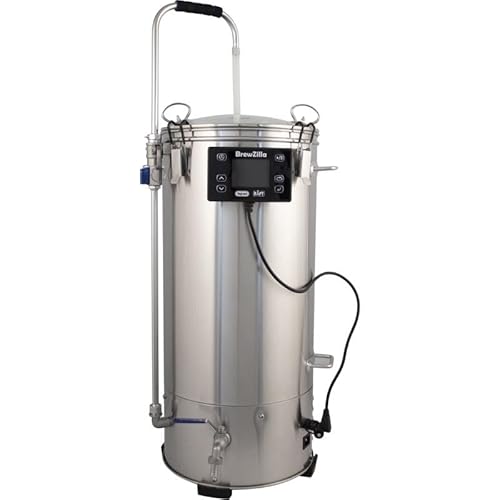
BrewZilla Gen 4 35L (110V)
The 110V Gen 4 BrewZilla: stainless construction, automatic step mashing, nine gallon capacity.
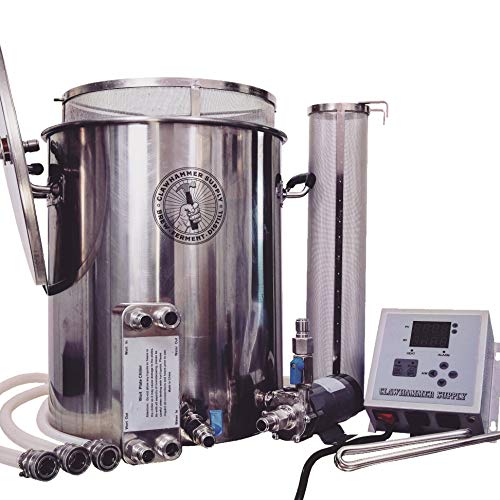
Clawhammer Supply 10.5 Gallon Electric System
Digital semi-automated 120V BIAB system with a 10.5 gallon kettle, the largest single-vessel option here.

VEVOR Electric Brewing System (9.2 gal)
Budget 35 litre all-in-one with pump, the cheapest route to a full electric mash and boil.

FOHERE All-in-One Electric Brewing System (9.2 gal)
A 35 litre single-vessel electric system at entry pricing.
Related on BrewGearCalc
- Mash and Boil vs BrewZilla
- Cost per batch calculator
- Strike water calculator
- Best brewing gear
- Equipment specs
Frequently asked questions
- Is the BrewZilla Gen 4 or the Grainfather G30 better for a first all-grain system?
- For most first-time all-grain brewers the BrewZilla Gen 4 is the more practical choice. It costs $599.99 against $870.20 for the Grainfather G30, and its 35L capacity is stated directly on the listing, which makes planning grain bills and boil volumes far simpler than starting from an unstated figure. The lower price also leaves more room in a first-year budget for a hydrometer, a chiller and ingredients.
- What is the capacity of the Grainfather G30?
- This catalog's Grainfather G30 listing does not state a capacity figure, so this site will not guess at one on your behalf. Before buying, confirm the actual working volume directly with Grainfather or the retailer selling the unit, especially if you are trying to match a specific finished batch size such as five gallons. The BrewZilla Gen 4 in the same price range does state its 35L capacity directly on the listing, which is one reason it is easier to plan a grain bill and boil volume around.
- Does the BrewZilla Gen 4 come with a pump?
- This catalog lists a 110V BrewZilla Gen 4 with a pump included and a separate 110V listing without one specified, both at $599.99. Read the exact listing title before buying, since the pump is the main functional difference between them, similar to the pump and no-pump split on the Brewer's Edge Mash and Boil line.
- Can I buy the 220V BrewZilla for my house?
- Only if your home actually has a dedicated 220V circuit wired for it, which most US kitchens and garages do not. This site does not recommend the 220V BrewZilla for a reader on standard 110V household power, since using the wrong voltage version is a purchase mistake that can damage the unit or simply never work.
- Which system is easier to clean, BrewZilla or Grainfather?
- Both are single vessel all-in-one systems, so neither requires cleaning a separate mash tun or kettle the way a three-vessel setup does. Published listings for both focus on the false bottom and pump assembly as the parts needing the most attention after a brew day; neither brand publishes a claim of being meaningfully easier to clean than the other.
- Is the Grainfather G30 worth the higher price?
- It can be, for a brewer who specifically wants the Grainfather app-connected control and brand ecosystem. On pure specifications available here, though, it costs about $270 more than the BrewZilla Gen 4 and does not state its capacity, so a buyer choosing on price and clarity alone will usually find the BrewZilla the stronger value.
Researched from published brewing formulas, manufacturer specifications and verified owner reviews. This is general guidance, not professional advice.