Charts
What Mash Temperature Does to Your Beer
Mashing near 148F favors beta-amylase and produces a drier, more fermentable wort, mashing near 158F favors alpha-amylase and leaves more body and residual sweetness, and 152F is the common middle ground most home brewers start from.
Two enzymes, two different sugars
Mash temperature controls which of two starch-converting enzymes in malted barley does most of the work, and that choice decides how fermentable the resulting wort is. Beta-amylase works best toward the lower end of a typical mash range and clips sugar chains from the end, producing mostly the simple, highly fermentable sugar maltose. Alpha-amylase works best toward the higher end of the same range and cuts starch chains in the middle at random points, leaving behind a mix that includes longer, less fermentable dextrins alongside fermentable sugar.
Every mash sits somewhere on a spectrum between those two enzymes' preferred ranges, and because both enzymes remain active across a wide band, a single mash temperature never produces purely one outcome or the other. It shifts the balance.
What each end of the range does to the finished beer
These are directional descriptions, not fixed attenuation percentages. The actual fermentability a given mash produces depends on the grain bill, the yeast strain, mash thickness, mash duration and several other variables working together, so this chart deliberately does not attach a specific attenuation percentage to a specific temperature. Two brewers mashing the same grain bill at the same 152F with different yeast strains can see meaningfully different final gravities, because the enzymes only set up the sugar profile, the yeast decides how much of it actually ferments.
| Mash temperature | Enzyme favored | Effect on wort and beer |
|---|---|---|
| 148F | Beta-amylase | Drier, more fermentable wort, thinner body |
| 150F | Beta-amylase, still favored | Dry side of balanced, crisp finish |
| 152F | Balanced between both enzymes | The common middle ground, moderate body and fermentability |
| 154F | Alpha-amylase, becoming favored | Fuller side of balanced, rounder mouthfeel |
| 156F | Alpha-amylase favored | Fuller body, more residual sweetness |
| 158F | Alpha-amylase strongly favored | Full body and noticeable sweetness, lowest fermentability in this range |
Matching mash temperature to a style goal
This is a widely repeated shop convention, useful as a starting point, not a physical law. A brewer chasing a specific mouthfeel should treat these targets as a first guess to refine over a few batches with a given system and grain bill, since mash tun insulation, dough-in ratio and even altitude all nudge the outcome.
| Style goal | Typical mash temperature target | Reasoning |
|---|---|---|
| Dry, crisp finish (West Coast style pale ales and IPAs) | 148 to 150F | Favors beta-amylase for maximum fermentability |
| Balanced everyday ales and lagers | 152F | The common starting point most recipes default to |
| Fuller body, more sweetness (stouts, porters, sweeter ales) | 154 to 158F | Favors alpha-amylase, leaves more body-forming dextrins |
Why the actual mash temperature drifts from the number you set
Setting a mash temperature and holding it are different problems. A mash loses heat to its vessel, its lid and the surrounding room, and a cooler-style mash tun with no direct heat source will drift down over the course of an hour long mash if it started too close to target and was not compensated with a slightly higher strike water temperature. This site's strike water calculator solves for the strike temperature needed to land the grain and water at a chosen mash temperature, accounting for the fact that cool grain always pulls the mixed temperature down from wherever the water started.
A mash that drifts a few degrees during the rest is rarely a problem, since both enzymes remain active across a range wider than a few degrees of drift. A mash that starts more than a handful of degrees off target, though, can shift the finished beer noticeably fuller or drier than intended, which is why checking mash temperature partway through the rest, not just at dough-in, catches drift before it matters.
Enzymes stop working outside their range
Both enzymes denature, meaning they permanently stop functioning, if a mash runs hot enough for long enough, which is part of why a mash-out step near the top of the mash range or slightly above it is used to lock in the wort's fermentability before lautering. Running a mash too cool causes a different problem: below the range where either enzyme works efficiently, conversion simply takes longer or stalls, which is why very low mash temperatures used for specific styles need extended rest times to fully convert the available starch.
A spectrum, not a switch
It helps to picture mash temperature as a dial rather than a toggle between two settings. Both beta-amylase and alpha-amylase are working at essentially every point along the 148 to 158F range this chart covers, and neither one simply turns off outside its own preferred zone. What changes as the temperature climbs is the ratio between how fast each enzyme is clipping sugar chains, so the wort produced at 150F is not a beta-amylase wort with no alpha-amylase contribution, it is a wort weighted heavily toward beta-amylase's product with a smaller alpha-amylase contribution mixed in. That gradual weighting is exactly why moving a mash temperature by two or three degrees produces a noticeable but not dramatic shift in the finished beer, while moving it by eight or ten degrees produces a shift most drinkers can pick out directly.
This also explains why a single number on a recipe sheet is always a simplification. A real mash rest sits at a temperature for an extended period, during which both enzymes keep working the whole time, and the finished wort is the cumulative result of that entire rest rather than a snapshot taken at any one instant. A brewer who starts a mash a couple of degrees warm and lets it drift down to target over the first several minutes has actually run a mash slightly weighted toward the warmer end for part of the rest, even though the thermometer eventually settles on the intended number.
Mash thickness and time change how far a temperature choice actually goes
Temperature is not the only variable feeding into how a mash converts. Mash thickness, meaning the ratio of water to grain, affects how easily enzymes move through the mash and reach starch, and a thinner mash tends to convert somewhat differently than a thick one held at the exact same temperature, though the direction and size of that effect vary enough by system that this chart does not attempt to attach a number to it. Rest duration matters just as much: a mash held at a given temperature for a short rest may not have given the enzymes enough time to finish converting the available starch, regardless of which temperature was chosen, while an unusually long rest at the same temperature gives both enzymes more total time to work, which can shift the outcome further toward whichever one dominates at that temperature.
Because temperature, thickness and time all interact, changing only the temperature on a proven recipe and expecting a single, predictable shift in the finished beer is an oversimplification. A brewer troubleshooting an unexpected final gravity should look at all three together, not assume the mash temperature alone is responsible, especially if the mash tun, grain crush or rest length also changed between batches.
Everything else worth considering

CDN Waterproof Digital Thermometer (4.75 inch stem)
NSF certified waterproof thermometer with a long stem, which reaches into a mash without soaking the housing.

OXO Good Grips Digital Instant Read Thermometer
Fast reading digital thermometer for checking strike and mash temperature.

Inkbird ITC-308 Temperature Controller
Two stage plug-in thermostat that switches a fridge and a heater, which is how most brewers hold fermentation temperature.

Inkbird WiFi ITC-308 Temperature Controller
The WiFi version, which logs fermentation temperature and alerts you when it drifts.
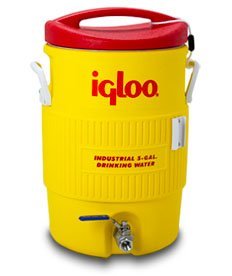
Learn To Brew 10 Gallon Igloo Mash Tun
Insulated cooler mash tun with a stainless false bottom and valve, which holds mash temperature without any power.

Quick Fit 10 Gallon Igloo Mash Tun with Dial Thermometer
Cooler mash tun with stainless false bottom, stainless valve and a three inch dial probe thermometer.

TAPCRAFT Cooler Mash Tun Conversion Kit
False bottom, full port ball valve and gaskets to convert a drinks cooler you already own into a mash tun.
Related on BrewGearCalc
- Strike water calculator
- Mash water calculator
- Efficiency calculator
- Mash water reference hub
- Efficiency reference hub
Frequently asked questions
- Is 152F always the right mash temperature?
- No. 152F is a common default because it lands roughly in the middle between the two starch enzymes, giving a moderately fermentable, moderately full beer that works for most styles. Styles built around dryness, like a crisp pale ale, often mash a few degrees lower, and styles built around body, like a sweet stout, often mash a few degrees higher. Treat 152F as a sensible starting point to adjust from, not a fixed rule every recipe must follow.
- Does mash temperature affect alcohol content?
- Indirectly, yes. A lower mash temperature favors beta-amylase and produces a more fermentable wort, giving yeast more sugar it can actually consume, which generally results in a lower final gravity and therefore a higher alcohol content from the same starting gravity. A higher mash temperature leaves more unfermentable dextrins behind, raising the final gravity and lowering the alcohol yield from the same grain bill.
- What happens if my mash temperature drifts during the rest?
- A small drift of a degree or two rarely changes the outcome noticeably, since both enzymes stay active across a range wider than that. A larger drift, especially one that pushes the mash toward the opposite end of the range from where it started, can shift the finished beer's body and fermentability more than intended. Checking temperature partway through a long rest, not only at dough-in, is the simplest way to catch a real drift early.
- Can I mash outside the 148 to 158F range?
- Some specialty processes intentionally mash outside this band, but conversion becomes inefficient well below it and both enzymes denature at high enough temperatures held long enough. For standard all-grain and partial mash brewing, staying within the range this chart covers keeps both enzymes working and gives predictable, repeatable results from batch to batch.
- Do I need different mash temperatures for different grain bills?
- The enzyme behavior itself does not change with grain bill, but a grain bill heavy in specialty malts that already contribute body or unfermentable sugars can be mashed a bit lower to keep the beer from becoming too full, while a very simple, highly fermentable grain bill can sometimes be mashed a bit higher without becoming cloying. It is a balance decision, not a fixed rule.
- How long should I hold my mash at temperature?
- This chart covers what temperature does, not mash duration, which depends on the grain bill's crush, the mash thickness, and how completely you want conversion to finish. A common convention is a rest of roughly one hour for a standard all-grain mash, but thicker mashes or coarser crushes can need longer to fully convert.
Researched from published brewing formulas, manufacturer specifications and verified owner reviews. This is general guidance, not professional advice.