Best Gear
Best Mash Tuns
The Learn To Brew 10 Gallon Igloo Mash Tun at $192.99 is the best mash tun for most home brewers, because it arrives already assembled with the false bottom and valve installed, unlike a conversion kit you fit yourself.
Brewers who already own a cooler that fits the conversion parts can save money with the TAPCRAFT Cooler Mash Tun Conversion Kit at $84.99 instead of buying a complete unit.
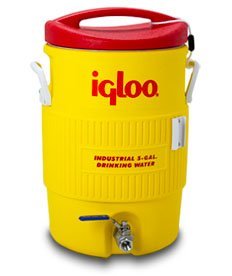
Learn To Brew 10 Gallon Igloo Mash Tun
Learn To Brew Mash Tun
It is a complete, already assembled 10 gallon cooler mash tun, so there is no drilling, fitting or sourcing your own cooler before your first all-grain mash.
Price last checked at publication and changes often.
What a mash tun has to do
A mash tun's job is to hold crushed grain and hot water at a set temperature for the length of the mash, typically in the neighborhood of an hour, while keeping heat loss low enough that temperature does not drift far from your target. A cooler based mash tun does this well specifically because a cooler's insulation is built for holding a temperature, not because it was designed for brewing.
Beyond insulation, the practical difference between mash tuns in this catalog comes down to two things: whether you supply your own cooler or buy one already built into the unit, and whether a thermometer is included so you can check mash temperature without opening the lid.
A false bottom or a slotted manifold inside the tun lets you drain clear wort off the bottom without grain husks clogging the outlet, which matters just as much as insulation. A complete mash tun typically has this built in, while a bare conversion kit expects you to fit it into a cooler you already own.
How we chose
The comparisons below rely on the manufacturer specifications published for each mash tun listing, plus verified purchase owner reviews describing real world use, such as how well a valve seals or how easy a false bottom is to clean. This is not a side by side mash test performed by this team; it reflects what is published about these products and what verified owners report after using them.
How the mash tuns compare
This catalog has three mash tun options, spanning a bring your own cooler conversion kit up to a complete unit with a built in dial thermometer.
| Mash tun | Type | Thermometer | Price |
|---|---|---|---|
| TAPCRAFT Cooler Mash Tun Conversion Kit | Conversion kit, bring your own cooler | No | $84.99 |
| Learn To Brew 10 Gallon Igloo Mash Tun | Complete 10 gallon cooler mash tun | No | $192.99 |
| Quick Fit 10 Gallon Igloo Mash Tun with Dial Thermometer | Complete 10 gallon cooler mash tun | Yes, dial | $215.15 |
Choosing between building your own and buying complete
The TAPCRAFT Cooler Mash Tun Conversion Kit at $84.99 is the least expensive entry point, but the price only tells part of the story: you still need to supply a cooler sized to fit the kit's fittings, and you'll be drilling a hole and fitting a valve and false bottom yourself. This is the right call if you already have a suitable cooler sitting around, or you specifically want to pick your own cooler size rather than accept whatever a complete unit ships with.
The Learn To Brew 10 Gallon Igloo Mash Tun at $192.99 skips all of that. It arrives already assembled with the false bottom and valve in place, so your first mash is about brewing, not about drilling a cooler correctly. For roughly $108 more than the conversion kit, you are paying for that assembly and for not needing to source your own cooler.
The Quick Fit 10 Gallon Igloo Mash Tun with Dial Thermometer at $215.15 adds a built in dial thermometer on top of the same complete, assembled design. That lets you check mash temperature without lifting the lid and losing heat in the process, which is a real advantage during a long mash. Brewers who already own a separate accurate thermometer, whether a handheld digital unit or a wireless logger, are paying extra for a feature they already have covered, so they should not pay the premium for this tier over the plain Igloo Mash Tun.
Where a cooler based mash tun runs into limits
A cooler mash tun holds temperature well but it does not add heat back if you undershoot your strike temperature or if the mash runs long in a cold room. Getting the strike water temperature right before you mash in matters more with a cooler mash tun than with a system that can actively reheat, since there is no way to add heat mid mash without a separate heating step.
None of the mash tuns in this catalog include an integrated grain mill or a way to weigh out your grain bill, so budget for those separately. Our grain mills roundup and our brew kettles roundup cover the other pieces of a full all-grain setup built around one of these mash tuns.
Dialing in mash temperature and efficiency
Whichever mash tun you use, the actual temperature you hit depends on your strike water temperature, your grain to water ratio and how much heat the tun itself absorbs before settling at your target. Run those numbers through our strike water calculator and mash water calculator before you mash in, and track your results with our efficiency calculator over a few batches so you know what your own setup consistently delivers, since a commonly cited target of 72 to 75 percent efficiency is a convention brewers use as a benchmark, not a number every setup will hit automatically.
Avoiding a stuck sparge
A stuck sparge, where wort stops draining freely from the mash tun, is one of the most frustrating things that can happen on brew day, and it usually comes down to grain husks packing too tightly against the false bottom or manifold. A crush that's too fine is the most common cause, so if this happens repeatedly, check the gap on your grain mill before assuming the mash tun itself is at fault.
Adding a handful of rice hulls to a grain bill that's heavy on wheat, oats or rye, all of which lack the husk that barley provides, helps keep channels open for wort to drain through, since those grains contribute very little husk material of their own. This is a widely used home brewer convention rather than a published requirement, and it costs very little to add as a precaution on a recipe you know runs husk-light.
An older cooler that has been used for both food storage and brewing for years can also lose some of its insulating performance over time, particularly around the lid seal. If you notice your mash temperature drifting more than it used to in a mash tun that has served you well for a long time, worn insulation or a degraded seal is worth checking before assuming your process has changed.
Preheating an empty mash tun with a gallon or two of hot water before adding your actual strike water and grain helps offset how much heat a cold cooler wall otherwise pulls out of your mash in the first few minutes. This is a simple, low cost habit that matters more in a cold room than a warm one, and it's a widely used convention among home brewers using a cooler mash tun rather than a system that actively holds temperature.
A round cooler mash tun and a rectangular one hold heat similarly well once insulated, so the choice mostly comes down to which shape fits your available space and, for a conversion kit, which cooler you already own or can source. A rectangular cooler can be easier to fit a rectangular false bottom into evenly, while a round cooler sometimes distributes a circular false bottom's drainage more evenly across the grain bed. Either works well for a standard home brew grain bill.
The three tiers
These are three genuinely different builds, not the same product at three prices. Buy the tier that matches how much you already know you will use it.
TAPCRAFT Cooler Mash Tun Conversion Kit
TAPCRAFT
The cheapest entry at $84.99, but you supply and drill your own cooler. Right if you already own a suitable cooler or want to pick your own size.
$84.99
View on AmazonLearn To Brew 10 Gallon Igloo Mash Tun
Learn To Brew Mash Tun
A complete, already assembled 10 gallon cooler mash tun for $192.99, no drilling or sourcing a cooler yourself.
$192.99
View on AmazonQuick Fit 10 Gallon Igloo Mash Tun with Dial Thermometer
Quick Fit
Adds a built in dial thermometer for $215.15 so you can check temperature without opening the lid. Brewers who already own a separate accurate thermometer should not pay this premium over the plain Igloo Mash Tun.
$215.15
View on AmazonEverything else worth considering

CDN Waterproof Digital Thermometer (4.75 inch stem)
NSF certified waterproof thermometer with a long stem, which reaches into a mash without soaking the housing.

OXO Good Grips Digital Instant Read Thermometer
Fast reading digital thermometer for checking strike and mash temperature.
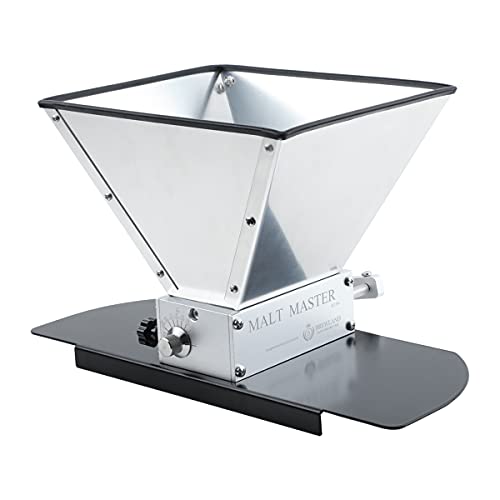
Brewland 2 Roller Grain Mill with Hopper
Adjustable two roller malt mill, which lets you crush your own grain and control efficiency directly.

Ferroday 2 Roller Stainless Grain Mill
Two roller stainless malt mill at entry pricing.
Related on BrewGearCalc
- Strike water calculator
- Mash water calculator
- Efficiency calculator
- Best grain mills
- Best brew kettles
Frequently asked questions
- What size mash tun do I need for a 5 gallon batch?
- A 10 gallon cooler mash tun, like the Learn To Brew Igloo Mash Tun or the Quick Fit version, gives enough room for the grain and strike water a standard 5 gallon finished batch needs, with margin left over. A smaller cooler can work for lighter beers with less grain, but a 10 gallon size covers most recipes without running into headroom problems.
- Do I need a thermometer built into my mash tun?
- No, but it is convenient. A built in dial thermometer like the one on the Quick Fit 10 Gallon Igloo Mash Tun lets you check mash temperature without lifting the lid, which reduces heat loss during a long mash. If you already own a separate digital or dial thermometer, you can use that instead and save the extra cost of a built in gauge.
- Can I convert any cooler into a mash tun?
- Most rectangular or round beverage coolers with a drain spout can be converted with a kit like the TAPCRAFT Cooler Mash Tun Conversion Kit, but the fittings need to match your cooler's spout size and wall thickness. Check the kit's stated fitting size against your specific cooler before buying, since a mismatch means the valve or false bottom won't seat properly.
- How long should grain sit in the mash tun?
- A widely used convention among home brewers is a roughly 60 minute mash, though this is a shop habit rather than a fixed physical requirement, and some recipes call for shorter or longer times. What matters more than hitting an exact number is holding a consistent temperature for however long your specific recipe calls for, which is exactly what a well insulated mash tun is built to do.
- Why does my mash temperature drop during a long mash?
- Even a well insulated cooler mash tun loses some heat over time, especially in a cold room or with a cooler that has aged seals. Preheating the tun with hot water before adding your mash, and keeping the lid closed as much as possible, both reduce how much temperature drifts. If drift is a consistent problem, a mash tun with a built in thermometer lets you catch it without opening the lid to check.
Researched from published brewing formulas, manufacturer specifications and verified owner reviews. This is general guidance, not professional advice.