Best Gear
Best Brew Kettles
The Northern Brewer MegaPot 10 Gallon with valve and thermometer at $249.99 is the best brew kettle for most all-grain home brewers, because both features are factory installed rather than added later.
Budget brewers can get the same 10 gallon capacity from the MRbrew 10 Gallon Brew Kettle with Thermometer at $138.99, though it has no built in valve for draining.
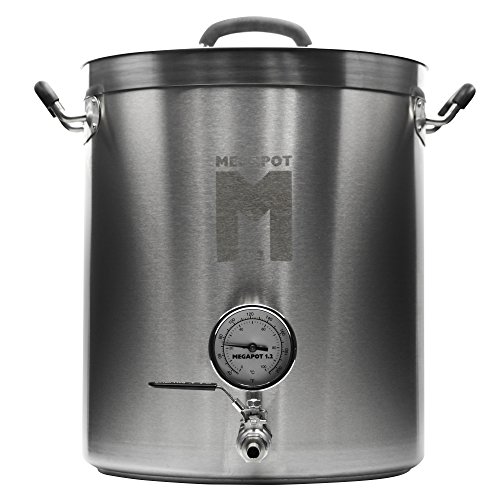
Northern Brewer MegaPot 10 Gallon (valve and thermometer)
Northern Brewer
A 10 gallon kettle with both a welded valve and a built in thermometer at $249.99 means you drain hot wort through the valve and read temperature without adding a separate thermometer or drilling a fitting yourself.
Price last checked at publication and changes often.
What a brew kettle actually needs to do
A brew kettle holds the pre-boil wort at a rolling boil for the length of the recipe, so the first requirement is simple: enough headroom that a vigorous boil does not push hot wort over the rim. For a standard 5 gallon finished batch, a 10 gallon kettle gives real headroom above the pre-boil volume, while an 8 gallon kettle is workable but leaves less margin.
Beyond capacity, the two features that separate a bare pot from a purpose built brew kettle are a valve and a thermometer. A valve near the bottom lets you drain finished wort without lifting a kettle full of near boiling liquid, which is both safer and more precise than pouring by hand. A built in thermometer lets you check strike and mash temperature without dipping a separate probe in and out.
Neither feature is strictly required. Plenty of home brewers use a bare kettle and drain through a hose fitting or a bottling wand instead, or check temperature with a handheld digital thermometer. But a kettle that already has these features factory installed means fewer separate tools to buy and fewer places for a fitting to leak.
How we chose
The capacity, valve and thermometer details below are taken directly from the manufacturer specifications published on each kettle's listing, and the tier assignments reflect a combination of that published spec sheet and patterns in verified purchase owner reviews, such as reports of leak free valves or accurate factory thermometers. This roundup is not the result of a side by side boil test run by this team; it reflects what is published and what verified buyers report after using these kettles themselves.
How the kettles compare
Price tracks capacity and features fairly closely in this catalog. The jump from an 8 gallon bare kettle to a fully equipped 10 gallon kettle with both a valve and thermometer is roughly $150.
| Kettle | Capacity | Valve | Thermometer | Price |
|---|---|---|---|---|
| Northern Brewer MegaPot 10 Gallon (valve and thermometer) | 10 gal | Yes | Yes | $249.99 |
| Northern Brewer MegaPot 10 Gallon (valve) | 10 gal | Yes | No | $229.99 |
| Concord 10 Gallon Brew Kettle (weldless fittings) | 10 gal | Yes, weldless | No | $139.98 |
| MRbrew 10 Gallon Brew Kettle with Thermometer | 10 gal | No | Yes | $138.99 |
| VEVOR 16 Gallon Brew Kettle with Filter | 16 gal | No, has filter | No | $111.04 |
| Gas One 8 Gallon Brew Kettle (4 piece set) | 8 gal | No | No | $99.99 |
Choosing by what you actually drain and read
The Gas One 8 Gallon Brew Kettle at $99.99 is the least expensive way into a real brew kettle, and its listing describes it as a 4 piece set, which is worth checking against your own recipe if you plan to grow into full volume 5 gallon batches, since headroom above your pre-boil volume matters. It has no valve and no built in thermometer, so plan on a separate way to check temperature and drain wort.
The Concord 10 Gallon Brew Kettle at $139.98 adds a weldless valve fitting for $40 more than the Gas One kettle, which means you can drain hot wort through the valve instead of pouring or siphoning, at the cost of a gasket that needs occasional attention to stay leak free the way any weldless fitting does.
At the top of this catalog, the Northern Brewer MegaPot 10 Gallon with valve and thermometer at $249.99 has both features already factory installed rather than fitted after the fact. That is worth paying for if you would otherwise buy a separate thermometer and install your own valve kit, since those add up in both cost and time. Brewers who already own a separate accurate thermometer and are comfortable with a weldless valve, or who only ever brew 5 gallons and don't need the extra features, do not need to pay the premium for this tier.
Pairing a kettle with a heat source
A standalone kettle needs its own heat source, whether that is a stovetop, an electric induction burner, or a dedicated brewing burner. If you go the burner route, keep it outdoors only. A propane burner produces carbon monoxide as it burns, and that gas has no smell to warn you it is building up, which makes an enclosed garage or basement a genuinely dangerous place to run one, not just an inconvenient one.
If you would rather not manage a separate kettle and heat source at all, our all-grain brewing systems and electric brewing systems roundups cover all-in-one units that combine the kettle and the heating element into one vessel.
Getting accurate numbers out of whichever kettle you choose
Whatever kettle you use, your actual boil-off rate depends on your burner or element's output, your kettle's diameter and how vigorously you boil, not on a single published number that applies to every setup. Run a batch or two through our boil-off calculator to learn your own system's rate, and use our cost per batch calculator to see how a kettle's price fits into the overall cost of an all-grain batch once grain, hops and yeast are factored in.
Material and cleaning notes worth knowing
Every kettle in this catalog is stainless steel, which resists corrosion from the acidic wort and from the cleaners home brewers use far better than aluminum or plated steel would over repeated use. Stainless also tolerates the caustic cleaners commonly used to strip built up wort residue, such as PBW, without the pitting or discoloration aluminum can develop under the same cleaning routine.
A caustic cleaner like PBW is genuinely alkaline and will irritate skin and eyes on contact, so wear gloves and eye protection when mixing or handling it at full strength, and never mix a caustic cleaner with an acid based sanitizer like Star San, since combining the two can produce a hazardous reaction rather than a more effective clean. Clean with one, rinse thoroughly, then sanitize separately.
A kettle with a valve has more surface area to clean than a bare pot, since wort residue and hop material can collect in the fitting itself, not just the kettle wall. Disassembling a weldless valve fitting periodically for a full clean prevents residue from building up somewhere a quick rinse won't reach.
Discoloration on the inside of a stainless kettle after repeated boils, sometimes called kettle scale or a light rainbow tint, is generally cosmetic and comes from minerals in your water reacting with the metal at boiling temperature, not a sign the kettle is failing. A dedicated stainless cleaner or a soak in PBW removes most of it if the appearance bothers you, though many home brewers leave it alone since it doesn't affect the beer.
A kettle's diameter, not just its stated volume, affects how a boil actually behaves. A wider, shorter kettle exposes more surface area to the air, which tends to speed up evaporation during the boil compared with a narrower, taller kettle holding the same total volume. Neither shape is wrong, but if you're switching from one kettle to a differently proportioned one, expect your boil-off rate to change and re-check it with our boil-off calculator rather than assuming your old numbers still apply.
Storing a kettle between brew days is worth a moment of thought too. A fully dry kettle with the lid left slightly open, rather than sealed tight, avoids trapping any residual moisture against the metal, and keeping it away from anywhere chemicals or cleaning supplies are stored prevents fumes from settling inside a kettle that will hold food grade liquid on its next use.
The three tiers
These are three genuinely different builds, not the same product at three prices. Buy the tier that matches how much you already know you will use it.
MRbrew 10 Gallon Brew Kettle with Thermometer
MRbrew
A built in thermometer at $138.99 gets you temperature readings without a separate tool, though it has no valve, so you'll drain by siphon or by lifting the kettle.
$138.99
View on AmazonConcord 10 Gallon Brew Kettle (weldless fittings)
Concord Cookware
A weldless valve fitting for about the same price as the beginner tier lets you drain hot wort without lifting the kettle, at the cost of a gasket that needs occasional attention.
$139.98
View on AmazonNorthern Brewer MegaPot 10 Gallon (valve and thermometer)
Northern Brewer
Both a valve and a thermometer come factory installed at $249.99, no separate parts to buy or fit. Brewers who already own an accurate thermometer or only ever brew 5 gallons don't need to pay this premium.
$249.99
View on AmazonEverything else worth considering

Northern Brewer MegaPot 10 Gallon (valve)
The same MegaPot body with a ball valve but no thermometer port fitted.

VEVOR 16 Gallon Brew Kettle with Filter
Large stainless kettle with a filter and filter tube, for ten gallon batches on a burner.
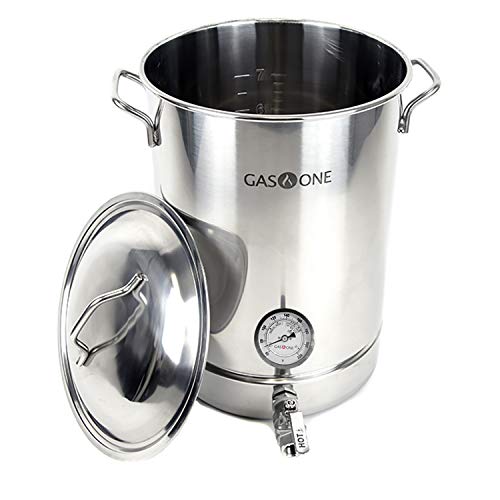
Gas One 8 Gallon Brew Kettle (4 piece set)
Pre-drilled 32 quart tri-ply bottom kettle sold as a four piece set.
Before you do this
A standalone kettle needs its own heat source. If that source is a propane burner, keep it outdoors only, since burning propane produces carbon monoxide, which has no smell and can build up unnoticed in a garage or basement.
Related on BrewGearCalc
- Boil-off calculator
- Cost per batch calculator
- Best all-grain brewing systems
- Best wort chillers
- Brewing guides
Frequently asked questions
- What size brew kettle do I need for a 5 gallon batch?
- A 10 gallon kettle is a common choice for a standard 5 gallon finished batch, since it gives real headroom above the pre-boil volume once you account for grain absorption and the water lost to boil-off. An 8 gallon kettle can work but leaves a smaller margin, which matters more with a vigorous boil that produces a lot of foam early on.
- Do I need a valve on my brew kettle?
- No. A valve lets you drain finished wort without lifting a kettle full of near boiling liquid, which is more convenient and arguably safer, but plenty of home brewers use a bare kettle and transfer with an auto siphon or by carefully pouring instead. A valve is worth paying for if avoiding a heavy, hot lift on brew day matters to you.
- Can I use my brew kettle on a regular stovetop?
- It depends on the kettle's diameter and your stovetop's burner output, since a wide kettle may not heat evenly on a smaller burner. Many home brewers use a dedicated propane burner instead specifically because it delivers more heat than a household stovetop. If you use a propane burner, it must stay outdoors because of the carbon monoxide it produces while burning.
- What is the difference between a weldless valve and a factory welded valve?
- A weldless valve uses a bulkhead fitting with a gasket that you or the manufacturer install through a hole in the kettle wall, while a factory welded valve is permanently attached during manufacturing. Weldless fittings, like the one on the Concord 10 Gallon Brew Kettle, cost less but the gasket needs occasional attention to stay leak free, while a welded valve has one less part to maintain.
- Is a built in kettle thermometer accurate enough to trust?
- Verified owner reviews on kettles with a built in thermometer, such as the MegaPot 10 Gallon and the MRbrew 10 Gallon, generally describe them as usable for mash and strike temperature checks. If your recipe depends on hitting a precise temperature, cross checking the built in gauge against a separate digital thermometer once is a reasonable way to confirm it reads accurately for your own kettle.
- How much bigger should my kettle be than my batch size?
- Most home brewers look for a kettle rated at roughly double their finished batch size, so a 10 gallon kettle for a 5 gallon finished batch, which leaves headroom for pre-boil volume and boil foam. This is a widely used convention among home brewers rather than a published rule, so treat it as a starting point and adjust based on how vigorously your own setup boils.
Researched from published brewing formulas, manufacturer specifications and verified owner reviews. This is general guidance, not professional advice.