Best Gear
Best Carboys and Fermenting Buckets
The Fermonster 7 Gallon Wide Mouth Carboy is the best fermenting vessel for most home brewers at $47.95, holding a 5-gallon batch with headspace in shatterproof PET rather than glass.
Brewers on the tightest budget are just as well served by the $31.95 FastRack 6.5 Gallon Fermenting Bucket.
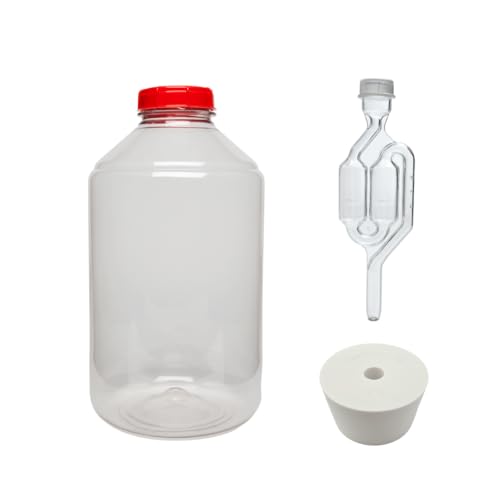
Fermonster 7 Gallon Wide Mouth Carboy
FastRack
A 7-gallon wide-mouth PET carboy at $47.95 gives a 5-gallon batch real headspace, opens fully by hand for cleaning and dry hopping, and will not shatter the way a dropped glass carboy can.
Price last checked at publication and changes often.
Bucket, carboy or glass: what actually differs
Buckets, carboys and glass jugs are all doing the same job as a conical minus the bottom valve: holding fermenting beer sealed away from air and contamination behind an airlock. What differs is visibility, cleaning and durability. A bucket is opaque, so a brewer cannot watch fermentation without opening the lid, but it is also the lightest, cheapest and easiest vessel to clean by hand since the whole top comes off. A carboy, whether glass or PET, is fully see-through, which lets a brewer watch krausen rise and fall without opening anything.
Glass carboys have been standard for decades because glass does not scratch, does not absorb odor, and is easy to inspect for cleanliness under a light. The real drawback is weight and fragility: a full glass carboy is heavy enough that lifting or carrying it solo, especially on stairs, takes real care, and glass that chips or cracks against a doorframe or a sink edge can fail suddenly, sometimes with the full weight of the vessel behind it. Handling a full glass carboy solo is where most glass carboy accidents actually happen.
Wide-mouth PET carboys, like the Fermonster in this catalog, exist specifically to remove that risk. PET is the same shatter-resistant plastic used in reusable water bottles: it does not chip, it will not fail the way glass does if it is dropped, and a wide mouth means a brewer can reach in by hand to clean it rather than working a bottle brush through a narrow glass neck.
None of these three materials change how yeast ferments the beer inside them. The choice between a bucket, a glass carboy and a PET carboy is entirely about handling, visibility and cleaning convenience, not about fermentation quality, which is why a brewer can move between all three styles across different batches without expecting any difference in the finished beer.
How the options compare
| Vessel | Material | Capacity | Price | Trade-off |
|---|---|---|---|---|
| FastRack 6.5 Gallon Fermenting Bucket | Opaque food-grade plastic | 6.5 gal | $31.95 | Cheapest, easiest to clean, no visibility |
| U.S. Solid 6.5 Gallon Fermenter | Opaque plastic, with airlock and spigot | 6.5 gal | $47.57 | Spigot built in, still no visibility |
| Italian 6 Gallon Glass Carboy | Glass | 6 gal | $69.95 | Inert and scratch-proof, heavy and breakable |
| North Mountain Supply 6.5 Gallon Glass Carboy | Glass | 6.5 gal | $96.99 | Same trade-offs, slightly more headspace |
| Fermonster 7 Gallon Wide Mouth Carboy | PET plastic | 7 gal | $47.95 | Shatterproof, visible, wide mouth for cleaning |
| Fermonster 3 Gallon Wide Mouth Carboy | PET plastic | 3 gal | $36.79 | Sized for small batches or starters, not a 5-gallon batch |
Sizing and headspace, not just price
The recurring rule for any of these vessels is the same: a 5-gallon batch wants roughly 6.5 gallons of capacity. Every bucket and 6 to 7 gallon carboy in this catalog is sized with that in mind; the 3-gallon Fermonster is the exception, built for small-batch brewing or building a yeast starter, not a standard 5-gallon batch. Buying a 5-gallon-rated vessel for a 5-gallon batch looks efficient on paper and is one of the most common causes of a fermentation pushing krausen into the airlock or out around the lid.
A spigot, like the one built into the U.S. Solid fermenter or sold separately for a FastRack bucket, is worth the extra cost for anyone bottling rather than kegging, since it lets a brewer rack straight into a bottling wand without lifting a full vessel onto a counter. It is a convenience feature, not a fermentation quality difference from a plain lidded bucket.
The same headspace math applies whether a brewer chooses a bucket or a carboy, since krausen does not care what material is holding it back. A brewer switching from an exact 5-gallon vessel to a properly sized 6.5-gallon one after a messy first batch is one of the most common lessons learned in a brewer's first year, and it costs very little to get right from the start compared with cleaning fermented wort off a shelf and floor.
Airlocks and lids: the parts that actually seal the vessel
A bucket lid and a carboy stopper do the same fundamental job, sealing the vessel while leaving an opening for an airlock, but they achieve it differently. A bucket lid uses a rubber gasket around its full circumference and a grommet sized for a three-piece airlock or a drilled hole for a blow-off tube. A carboy uses a rubber stopper sized to its neck diameter, which differs between a standard glass neck and a wide-mouth PET carboy, so airlocks and stoppers are not always interchangeable between the two styles without checking the size first.
Whichever style is used, the airlock itself needs to stay filled with sanitizer solution and stay clear of krausen to keep working as a one-way valve for escaping CO2. A blow-off tube, a length of tubing running from the vessel into a jar of sanitizer, is the standard substitute during the first few vigorous days of a strong fermentation, when krausen would otherwise clog a standard airlock.
Cleaning a bucket versus cleaning a carboy
A bucket's fully open top makes it the easiest of any fermenter style to clean by hand with a cloth or a short brush, reaching every interior surface directly. A carboy, whether glass or PET, has a narrow neck relative to its body, and even a wide-mouth version is not open enough to fit a hand and a cloth through comfortably, which is why a long carboy brush, like the Tapcraft model in this catalog, exists specifically to reach the bottom and sides of a carboy through its opening.
Glass carboys benefit the most from a dedicated brush because any residue left in a corner is harder to spot and harder to reach than in an open bucket. A cleaning routine using an alkaline cleaner like PBW followed by a sanitizer like Star San works the same way across all of these vessels; the real difference is simply how much physical effort it takes to reach every surface.
A bundle that pairs a sanitizer with a cleaner, like the Star San and PBW combination sold together in this catalog, is a reasonable way to make sure both products are on hand at the same time, since running out of one mid-cleaning is a common annoyance. Neither product substitutes for the other: PBW removes residue and organic buildup, while Star San is a no-rinse sanitizer applied after a vessel is already visibly clean, and skipping the cleaning step in favor of sanitizer alone leaves organic material behind that sanitizer was never designed to remove.
When to still choose glass
Glass has not disappeared for good reasons. It is the one material here that will never absorb an odor from a prior batch, never hold a scratch that a cleaning brush cannot reach, and it lets a brewer see through even a dark stout in full light. Brewers who keep one carboy for years, sanitize carefully, and are comfortable handling a heavy, full vessel by themselves or with help still get real value from glass. It is a poor fit for anyone brewing solo without a stable, low place to set it down, or anyone who has already dropped one.
A brewer who already owns a glass carboy does not need to replace it out of caution; the real safety practice is simply handling it carefully when full, keeping it away from tile or concrete edges, and asking for help lifting it rather than avoiding glass altogether.
How we chose
These comparisons come from each manufacturer's published capacity and material specifications, checked against verified owner reviews describing lid seals, spigot reliability and, for the glass options, real reports of breakage. This is written from specifications and reported owner experience, not from carrying or dropping any of these vessels in a shop.
The three tiers
These are three genuinely different builds, not the same product at three prices. Buy the tier that matches how much you already know you will use it.
FastRack 6.5 Gallon Fermenting Bucket with Lid
FastRack
$31.95 for a gasketed lid and grommet ready for an airlock is the lowest-cost complete fermenter here, and it is the simplest to clean since the whole top comes off.
$31.95
View on AmazonU.S. Solid 6.5 Gallon Fermenter with Airlock and Spigot
U.S. Solid
At $47.57 this bundles an airlock and a spigot into the bucket itself, saving a separate spigot purchase for anyone planning to bottle straight from the fermenter.
$47.57
View on AmazonNorth Mountain Supply 6.5 Gallon Glass Carboy
North Mountain Supply
A 6.5-gallon glass carboy at $96.99 for brewers who want an inert, scratch-proof vessel they will keep for years. Anyone nervous about handling a heavy, breakable full vessel alone, or anyone who brews solo without help lifting it, should not buy this and should choose the Fermonster PET carboy instead.
$96.99
View on AmazonEverything else worth considering

FastRack 6.5 Gallon Fermenting Buckets with Lids (2 pack)
Two BPA-free food grade HDPE buckets with drilled lids and airlocks, which covers primary and bottling in one purchase.

FastRack Fermentation Bucket with Spigot
Food grade bucket with a fitted spigot, which doubles as a bottling bucket.

Italian 6 Gallon Glass Carboy
Clear glass carboy that lets you watch fermentation, and does not scratch or hold odours the way plastic can.

North Mountain Supply 6 Gallon Glass Carboy
Italian glass carboy supplied with both drilled and undrilled stoppers.

Fermonster 3 Gallon Wide Mouth Carboy
Three gallon wide mouth PET fermenter for small or split batches.
Before you do this
Size for headspace, not just batch volume: a 5-gallon batch wants roughly 6.5 gallons of vessel so krausen has somewhere to go instead of pushing into the airlock. A full glass carboy is also heavy enough that carrying it solo, especially on stairs, deserves real care, since a chip or crack in glass can lead to a sudden failure.
Related on BrewGearCalc
- Best fermenters for home brewing
- Best conical fermenters
- Hydrometer correction calculator
- Guides
- Reference
Frequently asked questions
- Should I buy a glass or plastic carboy for beginner homebrewing?
- For a first several batches, a wide-mouth PET carboy or a plastic bucket is the easier and safer choice. PET carboys like the Fermonster will not shatter the way glass can if dropped, and buckets are the simplest of all to handle and clean. Glass has real advantages, it never scratches or absorbs odor, but those advantages matter most to brewers who already have their sanitation routine dialed in and are comfortable handling a heavy, full vessel.
- Why do fermenting buckets not have a window to see the beer?
- Most fermenting buckets are made from opaque food-grade plastic mainly for cost and durability, not to block light on purpose, though keeping fermenting beer out of light is a real side benefit some brewers value. A brewer who wants to watch krausen rise and fall without opening the lid should choose a carboy instead, glass or PET, since both are fully transparent. Buckets and carboys ferment beer the same way; the difference is purely visibility and cleaning access.
- How much headspace do I actually need above a 5-gallon batch?
- Plan on roughly 6.5 gallons of total vessel capacity for a 5-gallon batch, which leaves about 1.5 gallons of headspace for krausen during active fermentation. A vigorous fermentation, especially with a highly attenuative yeast strain, can produce a thick, rocky foam layer that needs that room. Fermenting a 5-gallon batch in an exactly 5-gallon vessel is one of the most common causes of krausen pushing into the airlock or overflowing around the lid.
- Is a bottling bucket the same thing as a fermenting bucket?
- They can be the same physical bucket, but they serve different jobs at different stages. A fermenting bucket holds beer while yeast is actively working and needs an airlock fitted to its lid. A bottling bucket holds finished beer mixed with priming sugar just before bottling and typically has a spigot near the bottom for filling bottles. Many brewers use one bucket with a spigot for both jobs, or keep two dedicated buckets to avoid cross-contamination between stages.
- Are wide-mouth carboys harder to seal than narrow-neck glass ones?
- No, if the lid or stopper is sized correctly for the opening. Wide-mouth PET carboys use a screw-on or friction-fit lid designed specifically for that larger opening, and a properly seated lid seals just as reliably as a narrow rubber stopper on a glass carboy. The wider opening is actually an advantage for cleaning and dry hopping by hand, which a narrow glass neck makes much harder to do without special tools.
- Can I use a 3-gallon carboy for a 5-gallon batch?
- No. A 3-gallon carboy, like the smaller Fermonster in this catalog, does not leave enough headspace for a 5-gallon batch's krausen and risks a fermentation blowing out through the airlock or lid within the first day or two. That size is built for small-batch brewing, roughly 2 to 3 gallon batches, or for building a yeast starter. A standard 5-gallon batch needs a 6 to 7 gallon vessel to ferment safely.
Researched from published brewing formulas, manufacturer specifications and verified owner reviews. This is general guidance, not professional advice.