Reviews
BrewZilla Gen 4 Review
The BrewZilla Gen 4 is a 35 liter, 110V all-in-one brewing system with a built-in pump, priced at $599.99, and it suits an all-grain brewer who has outgrown a separate mash tun and kettle and wants recirculation in a single vessel.

BrewZilla Gen 4 (35L, 110V, with pump)
Kegland
It bundles a pump, a heating element and a mash basket into one 35 liter vessel, so a brewer moving up from basic all-grain gets recirculation without assembling a second or third vessel.
Price last checked at publication and changes often.
How this review was put together
Nobody on this site owns a BrewZilla Gen 4. This review is a synthesis of the manufacturer specification (35 liters, 110V, with pump, priced at $599.99), the listing details available for the product, and what verified owner reviews consistently report across retail and community sources. It is not the result of personal hands-on testing, and any review that claims lab measurements or side-by-side brew days for this specific product should be asked what those claims are actually based on.
That approach has a real limit. It cannot report a boil-off rate measured in a specific kitchen, or how the pump sounds after two years of PBW cycling. Where the published information runs out, that gap is stated plainly here instead of being filled with a guess.
What the Gen 4 actually is
The Gen 4 is a single-vessel, all-in-one electric brewing system built around a 35 liter stainless kettle with an internal heating element, a digital controller, a removable mash basket for grain, and an integrated pump for wort recirculation. Recirculating the mash keeps the whole grain bed at a more even temperature than a static mash tun, which is the main reason pump-equipped all-in-one systems in this catalog cost more than pump-free versions.
At 35 liters the vessel converts to roughly 9.25 gallons of total volume, which after grain absorption and boil-off leaves a workable batch in the standard 5 gallon range for full-volume, no-sparge brewing. The 110V rating means it runs on a standard household circuit in the US rather than a 240V dryer-style outlet, which matters for anyone brewing in an apartment or a garage without dedicated wiring.
- Single 35 liter vessel handles mashing and boiling in place
- Built-in pump for wort recirculation during the mash
- Digital controller for step mashing temperatures
- 110V, so it runs on a standard household outlet
Specifications
The table below draws only from the published listing for each system. Where a figure is not stated in that listing, it is marked as such rather than estimated.
| System | Capacity | Pump | Price |
|---|---|---|---|
| BrewZilla Gen 4 (110V, with pump) | 35L (about 9.25 gal) | Included | $599.99 |
| BrewZilla Gen 3.1.1 | 35L (about 9.25 gal) | Not stated in listing | $469.95 |
| Grainfather G30 (3rd generation) | Not stated in listing | Not stated in listing | $870.20 |
Who this system actually fits
The Gen 4 is priced and positioned as an expert-tier all-in-one, and at $599.99 it is not a casual purchase. It fits a brewer who has already run several all-grain batches on a cooler mash tun and a separate kettle, understands why recirculation improves conversion, and wants that benefit without building a three-vessel setup from separate parts.
It is a poor fit for someone still deciding whether all-grain brewing is for them. A beginner all-in-one without a pump answers that question for a fraction of the cost, and this catalog has options at $229.41 and below built for exactly that purpose.
Where owner reports raise flags
Verified owner reviews of BrewZilla-style recirculating systems consistently mention two things worth weighing before buying. First, the false bottom and mash basket need thorough cleaning after every batch, since stuck grain against the heating element is a recurring complaint and can scorch wort on the next brew if ignored. Second, some owners report the stock probe reading mash temperature a few degrees off from a separate calibrated thermometer, which is a reason to verify strike and mash temperatures independently rather than trusting the built-in display alone.
Neither issue is disqualifying, but both are maintenance and calibration habits worth planning for rather than discovering mid-brew day.
How it compares to the alternatives
Against the BrewZilla Gen 3.1.1 at $469.95, the Gen 4 costs about $130 more for the same 35 liter capacity plus a confirmed pump, since the Gen 3.1.1's listing does not state whether a pump is included. If recirculation is the reason to buy a BrewZilla, the Gen 4 is the version that guarantees it in writing.
Against the Grainfather G30 at $870.20, the Gen 4 is the cheaper of the two expert-tier picks in this catalog, though the G30's listing does not state a capacity figure at all, which makes a direct volume comparison impossible without contacting the manufacturer. A brewer choosing between the two should decide on layout and ecosystem preference rather than a number that is not published for one of them.
Why recirculation matters more than it sounds like it should
A recirculating mash pumps wort from the bottom of the grain bed back over the top continuously through the mash rest, rather than letting the bed sit static the way it does in a cooler mash tun. That constant movement keeps the enzymes responsible for converting starch to fermentable sugar in more even contact with the grain, and it clears dough balls and hot spots near the heating element that would otherwise convert unevenly. The practical result reported by owners of recirculating systems is more consistent conversion efficiency from batch to batch, since the whole grain bed is heated and rinsed together instead of relying on stirring by hand at a few points during the rest.
This is also the honest reason the Gen 4 costs $130 more than the pump-optional Gen 3.1.1: the pump is not a convenience feature, it is the mechanism that produces the consistency a recirculating system is bought for in the first place. A brewer who plans to check efficiency against a target using this site's efficiency calculator will get a cleaner read on their process with a recirculating system, since less of the variation between batches comes from inconsistent stirring.
Planning strike water and boil-off before you buy
A single-vessel system does not give a brewer the flexibility of separate mash tun and kettle volumes, so it is worth planning strike water and boil-off numbers against the Gen 4's stated 35 liter capacity before the first brew day rather than during it. Strike water volume and temperature both depend on grain weight and desired mash thickness, and running those numbers through a strike water calculator ahead of time avoids overshooting the vessel's headroom once grain, strike water and later sparge or top-up water are all combined in one 35 liter shell.
Boil-off rate matters even more in a single vessel, since there is no separate boil kettle to size independently. A brewer moving to the Gen 4 from a two-vessel setup should re-check their expected boil-off against this specific vessel's geometry using a boil-off calculator, rather than assuming the same rate that applied to a wider or narrower kettle used previously.
Cleaning, maintenance and safety
An electric all-in-one with a heating element and a pump needs alkaline cleaner run through the recirculation path between batches, not just a rinse. PBW and similar alkaline cleaners remove baked-on wort and protein effectively, but they burn skin and eyes on contact and must never be mixed with an acid-based sanitiser like Star San, since combining the two causes a reaction rather than a stronger clean. Gloves and eye protection take ten seconds and are worth it every time.
Because this is an electric system rather than a propane burner, it also sidesteps the biggest safety argument against outdoor gas burners: carbon monoxide. That is one real reason electric all-in-ones are the default recommendation for brewing in a garage or basement, where a propane burner should never be run.
The verdict
The BrewZilla Gen 4 is a reasonable expert-tier purchase for a brewer who already knows they want recirculation and is done building a mash tun and kettle setup out of separate pieces. It is not the cheapest way into all-grain brewing, and it is not the only 35 liter option in this catalog, but a stated pump, a stated voltage and a stated capacity, all for $599.99, give a buyer more to verify against than a listing with gaps in it.
The three tiers
These are three genuinely different builds, not the same product at three prices. Buy the tier that matches how much you already know you will use it.
VEVOR Electric Brewing System (9.2 gal)
VEVOR
At $229.41 for a stated 9.2 gallon vessel, it lets a brewer confirm they like all-grain brewing before spending three times as much on a pump-equipped system.
$229.41
View on AmazonBrewer's Edge Mash & Boil Series 2 with Pump
Brewers Edge
At $437.56 it adds a pump at a lower price than the Gen 4, though its listing does not state a capacity figure, which is the tradeoff for the lower price.
$437.56
View on AmazonGrainfather G30 (3rd generation)
Grainfather
At $870.20 it suits a brewer already committed to the Grainfather accessory ecosystem. It is not worth the premium for a buyer who has not used that ecosystem before and cannot even confirm the vessel capacity from the listing.
$870.20
View on AmazonEverything else worth considering

BrewZilla Gen 3.1.1 (35L)
The previous generation BrewZilla at a lower price, with the same 35 litre stainless body and step mashing.

FOHERE All-in-One Electric Brewing System (9.2 gal)
A 35 litre single-vessel electric system at entry pricing.

Inkbird ITC-308 Temperature Controller
Two stage plug-in thermostat that switches a fridge and a heater, which is how most brewers hold fermentation temperature.

Five Star PBW Cleanser (4 lb)
The four pound tub, which is the sensible size once you are brewing regularly.
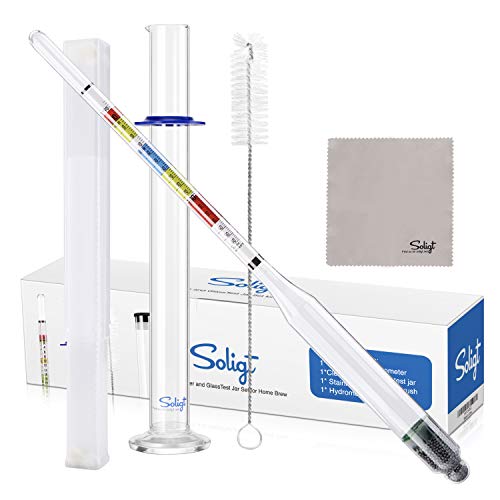
SOLIGT Triple Scale Hydrometer with Glass Test Jar
Hydrometer reading ABV, Brix and specific gravity, supplied with a glass jar.
Before you do this
Alkaline cleaners like PBW burn skin and eyes and must never be mixed with an acid sanitiser such as Star San. Because the Gen 4 is electric, it avoids the carbon monoxide risk of a propane burner, but a propane burner should still never be used indoors regardless of what system you eventually add to your setup.
Related on BrewGearCalc
- Strike water calculator
- Efficiency calculator
- Grainfather G30 review
- Brewer's Edge Mash and Boil review
- Full setup shopping list
- All system reviews
Frequently asked questions
- Does the BrewZilla Gen 4 come with a pump as standard?
- Yes, based on the published listing used for this catalog, the $599.99 BrewZilla Gen 4 configuration includes a built-in pump for wort recirculation. That is different from the Gen 3.1.1 listing, which does not state whether a pump is included, so if a pump matters to your decision, confirm it against the specific listing you are buying from rather than assuming it carries across every BrewZilla generation.
- How many gallons of beer can I actually brew with a 35 liter system?
- 35 liters converts to about 9.25 gallons of total vessel volume, not finished beer. After grain absorption, boil-off and trub losses during an all-grain session, a 35 liter system like the Gen 4 typically lands a brewer in the standard 5 gallon finished-batch range, which is the volume most homebrew recipes and this catalog's calculators are built around.
- Is the BrewZilla Gen 4 worth it over the cheaper Gen 3.1.1?
- It depends on whether you specifically want a confirmed pump. The Gen 4 costs about $130 more than the Gen 3.1.1 for the same 35 liter capacity, and its listing explicitly states the pump is included. The Gen 3.1.1's listing does not mention a pump either way, so a buyer who wants recirculation guaranteed in writing is better served by the Gen 4.
- Can I run the BrewZilla Gen 4 on a normal household outlet?
- The published specification lists the Gen 4 at 110V, which is standard household voltage in the US, rather than the 240V some larger brewing systems require. That means it should run on a normal outlet without dedicated wiring, though it is still good practice to confirm the specific outlet is on a dedicated circuit and protected appropriately before running any high-wattage appliance near liquid.
- What cleaner should I use on the mash basket and heating element?
- An alkaline cleaner such as PBW, run through the recirculation path and left to soak, is the standard approach for removing baked-on wort and protein from a mash basket and heating element. Rinse thoroughly afterward and sanitise separately with an acid-based product like Star San. Never mix the two together, since PBW and Star San are chemically incompatible and the alkaline cleaner alone can burn skin and eyes.
- Who should skip the Gen 4 and buy something cheaper first?
- Anyone who has not yet completed an all-grain batch and is not sure the extra control is worth the cost should start with a beginner-tier all-in-one such as the $229.41 VEVOR system or the $219.99 FOHERE system. Both let a new all-grain brewer confirm they enjoy the process before spending over $500 more on a pump-equipped, expert-tier system like the Gen 4.
Researched from published brewing formulas, manufacturer specifications and verified owner reviews. This is general guidance, not professional advice.