Charts
Priming Sugar Chart by Style and Temperature
A 5 gallon batch that reached its warmest point at 68F already holds about 0.861 volumes of dissolved CO2, so reaching a target of 2.4 volumes needs 116.9 g, about 4.12 oz, of corn sugar (dextrose) added at bottling.
Sucrose needs about 9 percent less weight than dextrose for the same carbonation effect, while dry malt extract needs about 47 percent more.
The standard behind every priming sugar calculation
Carbonation from bottle priming works because yeast still in suspension ferments a small, measured amount of added sugar in a sealed bottle, and the CO2 produced has nowhere to go, so it dissolves into the beer instead of escaping. The standard figure behind this calculation is that 15.195 grams of dextrose, corn sugar, added per gallon of beer raises the carbonation level by one volume of CO2. This is the reference constant that every priming sugar calculator, including the one on this site, is built around.
Different sugars are not equally fermentable per gram, so the 15.195 gram figure applies specifically to dextrose and needs to be adjusted for other sugar types. Sucrose, ordinary table sugar, needs about 9 percent less weight than dextrose to hit the same carbonation level, since it converts slightly more efficiently. Dry malt extract needs about 47 percent more weight than dextrose, because a meaningful portion of DME by weight is unfermentable material rather than simple fermentable sugar. These adjustment percentages are standard figures used across brewing references, not this site's own estimate.
| Sugar type | Grams per gallon per volume of CO2 | Relative to dextrose |
|---|---|---|
| Dextrose (corn sugar) | 15.2 g | Baseline |
| Sucrose (table sugar) | 13.8 g | About 9% less by weight |
| Dry malt extract (DME) | 22.3 g | About 47% more by weight |
The beer already has CO2 in it before you add anything
Beer holds dissolved CO2 from fermentation itself even before any priming sugar is added, and the amount it holds depends on the warmest temperature the beer reached at any point since active fermentation, not the temperature at bottling. Warmer beer holds less dissolved CO2 than colder beer, the same physical relationship that makes a warm soda go flatter than a cold one. The standard formula for this residual CO2 is residual volumes equals 3.0378 minus 0.050062 multiplied by temperature in F, plus 0.00026555 multiplied by temperature in F squared.
At 68F, that formula works out to a residual carbonation of approximately 0.861 volumes of CO2 already present in the beer. This is a meaningful starting point, not a rounding error to ignore, since it can represent a third or more of many style target carbonation levels before a single gram of priming sugar has been added. Skipping this step and priming for the full target carbonation level as if the beer started at zero is one of the more common ways home brewers overcarbonate a batch.
| Warmest temperature since fermentation | Residual CO2 (volumes) |
|---|---|
| 32F | 1.71 |
| 40F | 1.46 |
| 50F | 1.20 |
| 60F | 0.99 |
| 68F | 0.86 |
| 70F | 0.83 |
| 75F | 0.78 |
| 80F | 0.73 |
A worked example, from residual CO2 to grams of priming sugar
Take a 5 gallon batch whose warmest point since fermentation was 68F, and a target carbonation level of 2.4 volumes. The residual CO2 formula gives about 0.861 volumes already present, so the priming sugar only needs to add the difference, 2.4 minus 0.861, or about 1.539 additional volumes. Multiplying 1.539 volumes by the 15.195 gram per gallon per volume dextrose constant, then by the 5 gallon batch size, gives approximately 116.9 grams of dextrose, which converts to about 4.12 oz on a kitchen scale.
This same method scales cleanly to other targets for the same 5 gallon batch at the same 68F residual starting point, simply by recalculating the additional volumes needed and multiplying through the same constant. The table below shows dextrose amounts for a spread of common target carbonation levels, all derived directly from the same formula rather than estimated separately.
| Target carbonation (volumes) | Additional volumes needed | Dextrose needed |
|---|---|---|
| 1.5 | 0.639 | 48.6 g |
| 1.8 | 0.939 | 71.4 g |
| 2.0 | 1.139 | 86.5 g |
| 2.2 | 1.339 | 101.7 g |
| 2.4 | 1.539 | 116.9 g (4.12 oz) |
| 2.6 | 1.739 | 132.1 g |
| 2.8 | 1.939 | 147.3 g |
| 3.0 | 2.139 | 162.5 g |
Style carbonation targets are a convention, choose deliberately
The right target carbonation level is not derived from any formula, it is a matter of style convention built from what drinkers and judges expect for a given style, and brewers should treat these ranges as commonly accepted starting points rather than rigid law. A British ale left flatter than a wheat beer is not a mistake, it reflects a real, long-standing difference in how these styles are traditionally served and enjoyed.
| Style category | Typical carbonation range |
|---|---|
| British ale | 1.5 to 2.0 |
| Stout and porter | 2.0 to 2.4 |
| American pale ale and IPA | 2.2 to 2.6 |
| Lager | 2.4 to 2.7 |
| Belgian styles | 2.6 to 3.0 |
| Wheat beer and saison | 3.0 to 4.0 |
Getting an even, safe priming sugar addition
Dissolving priming sugar in a small amount of water, brought to a boil and then cooled, before adding it to the bottling bucket is standard practice, because it spreads the sugar evenly through the batch. Sprinkling dry sugar directly into a bucket of beer risks uneven distribution, which means some bottles end up overcarbonated while others end up flat, even though the total amount of sugar added across the batch was correct.
Stirring the sugar solution into the beer gently, rather than vigorously, helps distribute it fully without introducing extra oxygen or disturbing the sediment layer that has settled at the bottom of the fermenter. Racking the beer off that sediment into the bottling bucket first, then adding the sugar solution and stirring once, keeps both goals, even carbonation and minimal oxygen exposure, working together instead of against each other.
Filling bottles from the bottom up with a bottling wand or an auto siphon, rather than pouring from above, further reduces splashing and the oxygen pickup that comes with it. None of this changes the actual amount of priming sugar needed, which is governed by the residual CO2 and target carbonation figures above, but it does determine whether that calculated amount ends up evenly and safely distributed across every bottle in the batch.
Tracking the warmest temperature accurately
The residual CO2 figure in this chart depends on the single warmest temperature the beer has reached at any point since active fermentation, not the temperature the beer happens to be at on bottling day, and not the fermentation chamber's set point alone. A batch fermented in a temperature controlled chamber but then left in a warm garage for a few hours before bottling has effectively had its warmest point reset upward by that exposure, and the residual CO2 estimate should be based on that warmer temperature rather than the cooler, controlled fermentation temperature.
This matters most for brewers who cold crash before bottling. Cold crashing lowers the beer temperature and helps clarity, but it does not undo the CO2 that already escaped from solution during whatever warmer period the beer experienced earlier, since that lost CO2 does not fully redissolve just because the beer is chilled again afterward. Basing the residual CO2 calculation on the warmest point the beer actually reached, rather than its current chilled temperature, avoids underestimating the sugar needed and ending up flatter than the target.
When to reach for the calculator instead of the table
The tables on this page are built around a 5 gallon batch with a warmest temperature of 68F, chosen because it reflects a common home brewing scenario and because it lines up with the fully worked example this chart is built around. A batch of a different size, or one that reached a different warmest temperature, needs the same formula applied with those different numbers rather than an approximate reading taken from a table built for a different starting point. A priming sugar calculator runs the same residual CO2 formula and the same dextrose constant used throughout this page, just against your own batch size and temperature rather than the 5 gallon, 68F case used for illustration here.
Everything else worth considering

Digital Pocket Scale 200 g x 0.01 g
Hundredth of a gram resolution, which is the precision hop additions and water salts actually need.

BOMATA 1 kg x 0.01 g Digital Scale
Wider range 0.01 g scale, which covers both salt additions and whole hop packets.

FastRack Amber Beer Bottles 12 oz (24 pack)
Pry-off crown finish longneck amber bottles. Amber glass is what blocks the light that skunks hopped beer.

FastRack Amber Beer Bottles 12 oz (48 pack)
Forty eight amber longnecks, which is roughly what a five gallon batch fills.

North Mountain Hammer Bottle Capper
Simple hammer-style capper, slow but nearly indestructible.
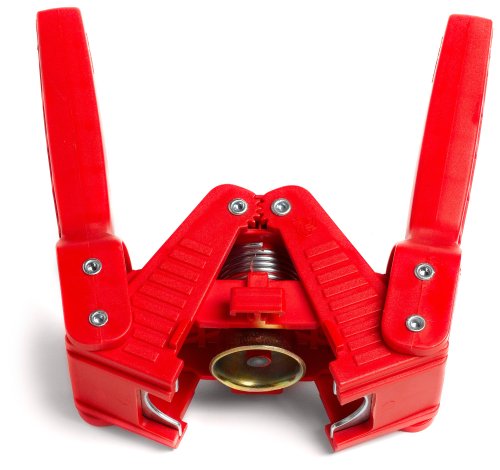
FastRack Red Baron Bottle Capper
Handheld two lever capper for 26mm crowns, the cheapest capper that works reliably.

Fermtech ProFiller Bottling Wand
Spring tip bottling wand that fills from the bottom and stops when lifted, which keeps oxygen out.

Fermtech Spring Bottle Filler with Tubing
Spring bottle filler supplied with food safe NSF certified tubing.

Ferroday Bottling Bucket Spigot (2 pack)
Replacement spigots for a bottling bucket, the part that always fails first.
Before you do this
Bottle bombs come from over-priming or from bottling before fermentation has actually finished, and attenuation figures alone do not prove fermentation is done. A hydrometer reading that holds stable across several consecutive days is the only reliable check before priming and capping. Very high target carbonation levels, especially in the wheat and saison range, also push closer to the pressure limits of standard glass bottles, so consider swing top or pressure rated bottles for beers primed above roughly 3 volumes.
Related on BrewGearCalc
- Priming sugar calculator
- Keg carbonation calculator
- Priming sugar reference
- Keg carbonation reference
- Reference charts
Frequently asked questions
- Why does the temperature my beer reached during fermentation matter for priming, not just the temperature at bottling?
- Dissolved CO2 in beer depends on the warmest temperature the beer has been at any point since fermentation finished, because once CO2 comes out of solution at a warm temperature it does not fully redissolve just because the beer is later chilled again. Using the beer's warmest point, rather than its current bottling day temperature, gives a more accurate residual CO2 figure and avoids underestimating how much CO2 is already present.
- Can I substitute table sugar for corn sugar using the same weight?
- Not at exactly the same weight. Table sugar, sucrose, needs about 9 percent less weight than dextrose to hit the same carbonation level, so using an equal weight of table sugar in place of dextrose will slightly overcarbonate the batch. Scale the amount down by roughly 9 percent, or use a priming sugar calculator set to the correct sugar type, rather than substituting gram for gram.
- What happens if I ignore residual CO2 and just prime for the full target volume?
- You will overcarbonate the batch, potentially significantly, because the beer already holds some CO2 before priming sugar is even added. At 68F that residual figure is about 0.861 volumes, which is a substantial fraction of many style targets. Priming for the full target as if starting from zero routinely produces gushers or, in more severe cases, contributes to bottle bombs.
- How do I know if my beer has actually finished fermenting before I prime it?
- A hydrometer reading that holds stable across several consecutive days is the only reliable confirmation that fermentation has finished. Attenuation percentages and expected final gravity ranges are useful planning tools, but they do not prove a specific batch has actually stopped fermenting. Priming a beer that still has active fermentation left to go is one of the leading causes of bottle bombs.
- Why does dry malt extract need so much more weight than dextrose for the same carbonation?
- Dry malt extract contains a meaningful portion of unfermentable material by weight alongside its fermentable sugar content, unlike dextrose which is essentially pure fermentable sugar. Because of this, DME needs about 47 percent more weight than dextrose to deliver the same amount of actual fermentable sugar to the yeast, and using it gram for gram in place of dextrose would undercarbonate the batch.
- Is it safe to prime a saison or wheat beer to 3.5 or 4 volumes in standard beer bottles?
- Standard beer bottles have a published pressure limit, and carbonation levels at the high end of the wheat and saison convention range approach that limit more closely than a British ale or stout would. Many brewers use thicker, pressure rated bottles such as swing top bottles for beers primed above roughly 3 volumes, and secure storage during conditioning matters more as the target carbonation level increases.
Researched from published brewing formulas, manufacturer specifications and verified owner reviews. This is general guidance, not professional advice.