Charts
Where the Two ABV Formulas Part Company
The standard ABV formula, OG minus FG times 131.25, and the alternate formula agree within a tenth of a percentage point at ordinary strengths, but the gap grows to about 1.1 percentage points by an original gravity of 1.100, and most calculators never say which one they used.
Two formulas, two different lineages
Home brewing software and calculators do not all agree on how to turn a pair of gravity readings into a percentage of alcohol by volume, and the reason is that two different formulas are both in wide, legitimate use. The first is the simple linear formula: ABV equals the original gravity minus the final gravity, multiplied by 131.25. It is fast, it needs nothing but the two readings and a calculator, and it is the formula most home brew shops and beginner guides teach first.
The second is the alternate formula, built from a curve rather than a straight line: ABV equals 76.08 times the original gravity minus the final gravity, divided by 1.775 minus the original gravity, multiplied by the final gravity divided by 0.794. It looks more complicated next to the simple version, but it is estimating the same physical quantity with a formula that tracks the real, nonlinear relationship between sugar consumed and alcohol produced more closely as gravity rises.
Both formulas are standard and both are published in home brewing references. Neither one is a shortcut somebody made up. The problem is that most calculators, spreadsheets and even books pick one of the two and never mention that the other exists, so two brewers checking the same OG and FG on two different tools can land on two different answers, and neither one has made an error.
Where the numbers actually land
| Original gravity | Final gravity | Standard formula ABV | Alternate formula ABV | Gap |
|---|---|---|---|---|
| 1.040 | 1.010 | 3.94% | 3.95% | 0.01 points |
| 1.050 | 1.010 | 5.25% | 5.34% | 0.09 points |
| 1.060 | 1.012 | 6.30% | 6.45% | 0.15 points |
| 1.070 | 1.015 | 7.22% | 7.52% | 0.30 points |
| 1.080 | 1.018 | 8.14% | 8.62% | 0.48 points |
| 1.090 | 1.020 | 9.19% | 9.99% | 0.80 points |
| 1.100 | 1.025 | 9.84% | 10.94% | 1.10 points |
How big the gap gets, by strength category
The pattern is consistent: at ordinary session and standard strength beers, under roughly 1.050 original gravity, the two formulas sit within a tenth of a percentage point of each other and the choice barely matters. Past about 1.060 the gap opens steadily, and by the highest gravities brewers reach for imperial stouts, barleywines and strong Belgian ales, the two formulas disagree by more than a full percentage point on the exact same two hydrometer readings.
| Strength category | Example OG range | Gap between the two formulas |
|---|---|---|
| Session and standard strength | up to about 1.050 | 0.01 to 0.09 points, essentially negligible |
| High gravity ales | about 1.060 to 1.080 | 0.15 to 0.48 points, worth noting |
| Very high gravity (barleywine, imperial stout) | about 1.090 to 1.100 and above | 0.80 to 1.10 points, always state which formula |
Why the gap opens instead of staying flat
The linear formula assumes that each point of gravity lost corresponds to the same fixed amount of alcohol produced, no matter how much gravity there was to begin with. That is a reasonable approximation over a narrow range, which is exactly why it works so well at ordinary gravities. Real wort does not behave in a perfectly straight line, though. As more sugar converts to alcohol, the alcohol itself changes the density and the fermentability of what is left behind, and the relationship curves. The alternate formula was built to follow that curve rather than approximate it with a straight line, which is why it tracks further from the simple formula exactly where the curve bends hardest, at the top end.
Neither formula is measuring something different. Both are estimating the same physical quantity, the percentage of the finished beer's volume that is ethanol, from the same two hydrometer or refractometer readings. The gap is a property of the math, not a disagreement about brewing.
A full worked example
Take a batch that starts at 1.070 and finishes at 1.015, a fairly typical strong pale ale or IPA. The standard formula gives 7.22 percent. The alternate formula gives 7.52 percent. That is a gap of three tenths of a point, small enough that it would not change which style category the beer sits in, but real enough that a brewer citing 7.22 and a friend running the exact same two numbers through the alternate formula and citing 7.52 have not made a mistake. They have simply used two different published formulas.
Most calculators do not tell you which one you are getting
This is the part that causes real confusion. A brewer plugs the same OG and FG into two different online ABV calculators or two different pieces of brewing software and gets two different answers, sometimes assumes one of them has a bug, and sometimes assumes their own hydrometer reading was off. In most cases neither is true. The calculator simply picked a formula, standard or alternate, and did not say so on the results page. Because the two formulas track together at ordinary strength, this silent choice rarely gets noticed until somebody brews something strong enough to reveal the gap.
- Under 1.050 OG: the two formulas differ by less than a tenth of a point, use either
- 1.060 to 1.080 OG: the gap is 0.15 to 0.48 points, worth noting which formula you used
- 1.090 and above: the gap exceeds 0.8 points, always state the formula alongside the number
Reading a hydrometer or refractometer feeds both formulas the same way
Both formulas need the same two inputs, an accurate original gravity and an accurate final gravity, and the formula choice cannot fix a bad reading. A hydrometer must be read at the bottom of the meniscus and corrected for the sample's actual temperature against the instrument's calibration temperature, usually 60 degrees Fahrenheit. A refractometer reads Brix, not gravity, and needs its own correction once alcohol is present, because alcohol bends light differently than sugar does, and a refractometer read after fermentation starts reports a final gravity that is falsely high unless it is corrected for that effect. This site's hydrometer correction and refractometer calculators handle both adjustments before the ABV formula ever sees the numbers, and the ABV calculator itself runs both formulas side by side so the gap is visible instead of hidden behind a single number.
A commonly repeated shortcut for a post-fermentation refractometer reading applies a wort correction factor near 1.04 to approximate the final gravity without a full calculation. That figure is a widely used convention in brewing software, not a fixed physical constant, and it is looser than a dedicated refractometer correction calculation that accounts for the specific original gravity involved. Feeding an approximated final gravity from that shortcut into either ABV formula compounds two sources of imprecision at once, the shortcut's own looseness and whichever formula gap this page describes, so a brewer chasing an accurate ABV number on a beer that matters is better served running the full refractometer correction first.
Why competition and label numbers deserve extra care
A brewer entering a competition, printing a label, or simply logging a personal recipe archive benefits from treating the ABV formula as part of the record, the same way a recipe records its grain bill or hop schedule. Competition judges rarely question a submitted ABV figure directly, but a brewer comparing notes with another entrant, or revisiting an old recipe years later to recreate it, gets a cleaner picture when the formula is written down alongside the number rather than left implied.
This is a small habit with an outsized payoff at the high end of the gravity scale. A homebrew club comparing barleywine recipes at a tasting, where original gravities routinely exceed 1.090, can end up debating a full percentage point of perceived strength that has nothing to do with anyone's actual brewing and everything to do with which formula each person's software happened to default to. Naming the formula ends that debate before it starts.
Everything else worth considering
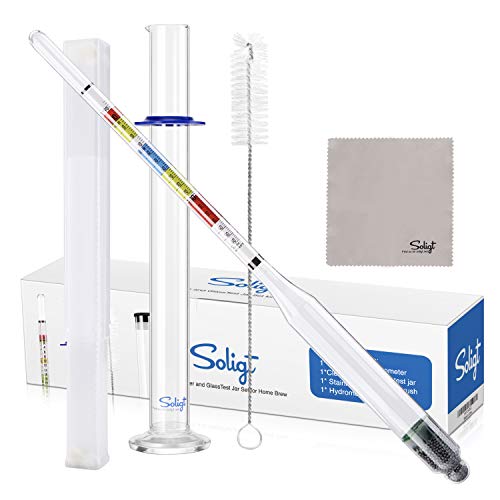
SOLIGT Triple Scale Hydrometer with Glass Test Jar
Hydrometer reading ABV, Brix and specific gravity, supplied with a glass jar.

Brewer's Elite Hydrometer and Test Jar
Triple scale hydrometer with a plastic test jar. Stable gravity on this instrument is the only real proof fermentation has finished.
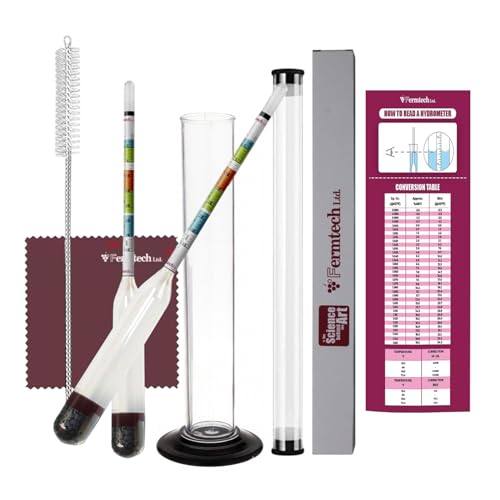
Fermtech Glass Triple Scale Hydrometer Kit
Triple scale glass hydrometer for beer, wine, mead and cider.
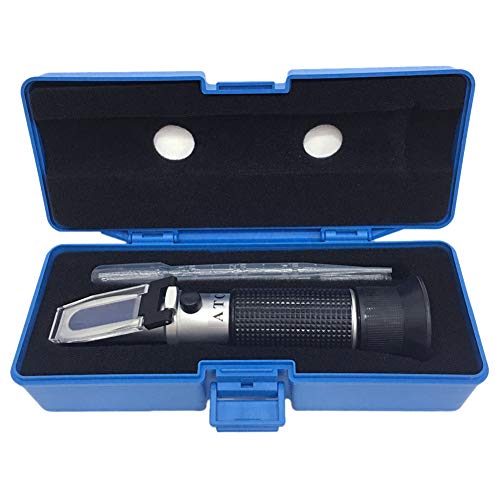
aichose Brix Refractometer with ATC (dual scale)
Dual scale Brix and specific gravity refractometer with automatic temperature compensation, which needs only two drops of wort.

Ade Advanced Optics Beer Wort Refractometer
Dual scale refractometer reading specific gravity 1.000 to 1.120 and Brix, built for wort rather than fruit.

Tilt Wireless Hydrometer and Thermometer
A floating sensor that reports gravity and temperature over Bluetooth, so you can confirm stable gravity without opening the fermenter.
Related on BrewGearCalc
- ABV calculator
- Hydrometer correction calculator
- Refractometer calculator
- ABV reference hub
- All reference charts
Frequently asked questions
- Which ABV formula is more accurate, standard or alternate?
- The alternate formula tracks the real, nonlinear relationship between sugar consumed and alcohol produced more closely, especially at higher gravities, so it is generally considered the more accurate of the two. The standard linear formula is close enough to be practically indistinguishable from it below about 1.050 original gravity, which is why both remain in wide, legitimate use.
- Why do two ABV calculators give me different numbers for the same readings?
- Most likely they used different formulas, standard or alternate, without disclosing the choice on the results page. Since the two formulas agree closely at ordinary gravities, this usually only becomes noticeable on stronger beers, where the gap can reach a full percentage point or more. Neither calculator is necessarily wrong, they are simply reporting two different published methods.
- Does the ABV formula gap matter for a normal session beer?
- Barely. Below roughly 1.050 original gravity the two formulas differ by a tenth of a percentage point or less, which is smaller than the natural variation from reading a hydrometer or thermometer slightly imprecisely. The gap only becomes something worth tracking once a recipe pushes well into high gravity territory, past roughly 1.060, where the difference starts to add up to more than a rounding error.
- Should I report which ABV formula I used on a strong beer?
- Yes, once a beer's original gravity climbs past about 1.080, the gap between the two formulas exceeds half a percentage point and can approach a full point at the highest gravities. Stating which formula produced a given ABV figure avoids confusion when someone else runs the same gravity readings and gets a different, equally valid number.
- Can a wrong hydrometer reading explain a big ABV difference instead of the formula?
- It can, and it is worth ruling out first. A hydrometer read at the wrong temperature, or not corrected for temperature at all, can shift a gravity reading enough to change an ABV result by more than either formula's gap would explain on its own. Checking both readings with a proper temperature correction before comparing formulas isolates which effect is actually responsible.
- Does a refractometer change which ABV formula I should use?
- No, a refractometer feeds the same two formulas the same way a hydrometer does, original gravity and final gravity. What it does change is how those readings need to be corrected first, since a refractometer's final gravity reading needs an alcohol correction once fermentation is underway, and skipping that correction will throw off either ABV formula by more than the gap between the formulas themselves.
Researched from published brewing formulas, manufacturer specifications and verified owner reviews. This is general guidance, not professional advice.