Guides
Brewing Water Chemistry Basics
Brewing water chemistry mainly means adjusting a handful of ions using salts: gypsum adds calcium and sulfate, calcium chloride adds calcium and chloride, and treating chlorinated tap water with a crushed Campden tablet, commonly dosed at one tablet per 20 gallons, removes chlorine and chloramine before they can react with malt and create a medicinal off flavor.
Why brewers adjust their water at all
The mineral content of your brewing water affects mash pH, how effectively mash enzymes work, and how the finished beer tastes. Municipal water composition varies enormously by supplier and even by season, so a water treatment approach that works well for one brewer's tap water may do little or actively hurt another's. Without a water quality report from your utility or a home test kit, any salt addition is a guess rather than an adjustment toward a known target.
The core ions and what they do
A handful of ions do most of the work in brewing water chemistry. Calcium supports enzyme activity during the mash, helps yeast health, and aids protein stability and clarity. Sulfate tends to accentuate a drier, more assertive perception of hop bitterness, while chloride tends to accentuate a fuller, rounder perception of malt. Magnesium and sodium play smaller supporting roles at low concentrations and can become unpleasant if overdosed.
- Gypsum (calcium sulfate): adds calcium and sulfate, a STANDARD ion contribution fixed by its chemical composition
- Calcium chloride: adds calcium and chloride, also a STANDARD ion contribution
- Chalk (calcium carbonate): intended to add calcium and carbonate, but see below
The sulfate to chloride ratio: a flavor convention
Many brewers use the ratio of sulfate to chloride as a rough guide to flavor balance, with a higher sulfate to chloride ratio associated with a drier, hop-forward impression and a higher chloride to sulfate ratio associated with a fuller, maltier impression. The ion contributions from gypsum and calcium chloride themselves are STANDARD chemistry, fixed by their molar composition, but using their ratio as a flavor dial is a CONVENTION built on brewer taste preference, not a hard rule with one correct answer for every style.
Because it is a taste-based convention, small adjustments and side-by-side comparisons across a few batches will tell you more about what you personally prefer than any single published ratio target.
Removing chlorine and chloramine with Campden tablets
Municipal water suppliers commonly add chlorine or chloramine for sanitation, and if it is not removed before brewing, it can react with phenolic compounds from the malt during the mash and boil to produce a medicinal or band-aid-like off flavor. Campden tablets, made of potassium metabisulfite, neutralize both chlorine and chloramine. A common dosing convention is one crushed tablet per 20 gallons of water, though this varies slightly by brand, so check your specific product's label.
Chalk and mash pH: what actually dissolves
Chalk, or calcium carbonate, is worth a specific mention because it is very poorly soluble in water and mostly will not dissolve when simply stirred into a pitcher or kettle. Adding it directly to plain water has a much smaller practical effect on alkalinity than its listing on a spreadsheet might suggest. Brewers wanting to raise mash pH generally get more reliable and predictable results from baking soda, used sparingly since it also adds sodium, or by adjusting the mash itself rather than relying on chalk added straight to water.
On the other side, lowering mash pH is commonly done with a small acid addition, such as lactic or phosphoric acid, dosed carefully and checked against a meter or pH strips rather than assumed. A widely published target range for mash pH, measured at room temperature, is roughly 5.2 to 5.6, though the right number for a given batch still depends on the grain bill and style.
| Product | Effect on water | Classification |
|---|---|---|
| Gypsum (calcium sulfate) | Adds calcium and sulfate | STANDARD ion contribution |
| Calcium chloride | Adds calcium and chloride | STANDARD ion contribution |
| Chalk (calcium carbonate) | Poorly soluble, limited effect added directly to water | STANDARD chemistry, CONVENTION use is often overstated |
| Potassium metabisulfite (Campden) | Removes chlorine and chloramine | STANDARD dechlorination chemistry |
Reading a water report
A municipal water quality report or a home water test typically lists calcium, magnesium, sodium, sulfate, chloride, and alkalinity or bicarbonate, usually in parts per million. These are the same numbers a water chemistry calculator asks for as a starting point, so having a real report in hand replaces guesswork with an actual baseline. Alkalinity in particular matters because it resists changes to pH, so water with high alkalinity needs a larger acid addition to reach a given mash pH than water with low alkalinity would.
If your supplier does not publish a report, many utilities will provide one on request, and inexpensive home test kits can fill in gaps for the ions that matter most. Skipping this step does not make salt additions wrong, but it does mean you are adjusting from an unknown starting point rather than a known one.
Building water from reverse osmosis or distilled water
Some brewers skip municipal water treatment entirely and start from reverse osmosis or distilled water, which arrives with close to zero mineral content. This removes the guesswork of not knowing your tap water composition, since you are building the entire mineral profile up from a known, essentially blank baseline using measured salt additions.
The tradeoff is that water with too little calcium and other ions can leave enzymes and yeast without minerals they rely on, so brewing from reverse osmosis or distilled water still calls for adding at least some gypsum or calcium chloride, not skipping salts altogether. Treat a blank water source as a starting point for building a profile, not as a finished one on its own.
Yeast nutrition and other water treatments
Potassium sorbate is sometimes grouped with water treatments in a homebrew shop, but it plays a different role entirely: it inhibits yeast reproduction and is used to stabilize a beer or cider against renewed fermentation after packaging, not to adjust mash or brewing water chemistry. It has nothing to do with calcium, sulfate, or chloride and should not be confused with a water salt when reading a recipe or an ingredient list.
Between salts, dechlorination, and pH adjustment, water treatment is one of the areas where small, well-measured changes matter more than large ones. A scale accurate to a tenth of a gram is worth owning if you plan to dose salts by the gram rather than by an approximate scoop, since the difference between a subtle and an overpowering mineral profile is often only a gram or two across a 5 gallon batch.
When to skip water treatment altogether
Not every batch needs a full salt addition and pH correction. A brewer using naturally balanced municipal water with no noticeable chlorine taste can brew perfectly good beer with nothing more than a Campden tablet for dechlorination, especially early on while other fundamentals like sanitation and fermentation temperature control matter more to the finished beer. Water chemistry is a refinement that pays off most once the rest of the process is already dialed in.
Treat it as one more variable to add deliberately, one change at a time, rather than a checklist every batch must satisfy from the very first brew day.
A simple starting approach
Start from a water report from your supplier, or from filtered or reverse osmosis water as a near-blank base, so you know what you are adjusting from rather than guessing. Add gypsum or calcium chloride in small, measured amounts per batch, keep notes, and taste finished beers side by side over a few batches rather than trying to hit a perfect number on the first try. Use the water chemistry calculator linked below to translate a target ion profile into actual salt weights, and confirm mash pH with a meter or strips rather than assuming your salt additions landed where you expected.
Everything else worth considering

Craft A Brew Gypsum (calcium sulfate, 4 oz)
Calcium sulfate, which raises calcium and sulfate and is the salt used to sharpen hop bitterness.

Craft A Brew Calcium Chloride (4 oz)
Calcium chloride, which raises calcium and chloride and is the salt associated with a rounder, fuller palate.

TAPCRAFT Brewing Salts Set
A set of the common brewing salts for building regional water profiles from a single purchase.

TAPCRAFT Campden Tablets (potassium metabisulfite, 50 count)
Removes chlorine and chloramine from tap water, which otherwise produce a medicinal off flavour.

YINMIK Digital pH Meter with ATC
Pocket pH meter with automatic temperature compensation for checking mash pH. It must be calibrated against buffer solutions to mean anything.
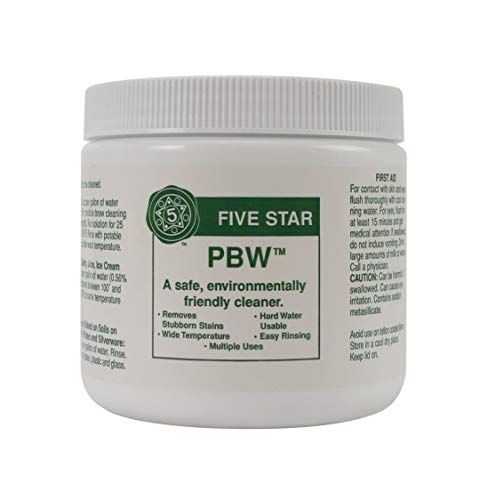
Five Star PBW (1 lb)
Non-caustic alkaline brewery wash that lifts baked-on trub without scrubbing. It is still an alkaline cleaner and needs gloves and eye protection.
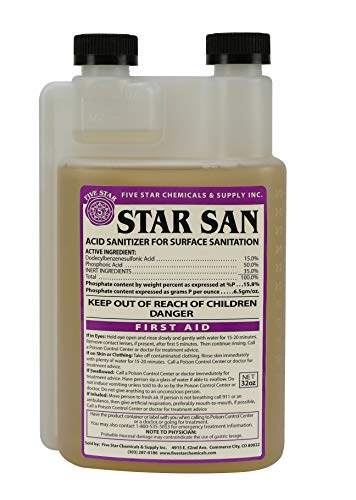
Five Star Star San (32 oz)
High foaming no-rinse acid sanitiser. One ounce treats five gallons, so a single bottle lasts most brewers a very long time.
Before you do this
Never mix a caustic or alkaline cleaner like PBW or sodium hydroxide with an acid-based sanitizer or a mash pH acid addition, wear gloves and eye protection when handling either, and store and dose potassium metabisulfite tablets in a ventilated space since crushing them releases some sulfur dioxide gas that can irritate eyes and airways.
Related on BrewGearCalc
- Water chemistry calculator
- How to brew all-grain beer
- Strike water calculator
- No-sparge and full volume mashing
Frequently asked questions
- What does gypsum actually do to my beer?
- Gypsum is calcium sulfate, so it adds both calcium and sulfate to your brewing water, a fixed chemical contribution. Calcium supports mash enzyme activity and yeast health, while sulfate tends to accentuate a drier, more assertive perception of hop bitterness. Brewers making hop-forward pale ales and IPAs commonly favor gypsum for this reason, though the right amount depends on your starting water.
- What's the difference between gypsum and calcium chloride?
- Both add calcium, but gypsum pairs it with sulfate while calcium chloride pairs it with chloride. Sulfate tends to accentuate a drier, hop-forward perception, while chloride tends to accentuate a fuller, maltier perception. Brewers often use the ratio between the two as a rough flavor guide, choosing more gypsum for hoppy styles and more calcium chloride for maltier ones.
- Do I need Campden tablets if my water doesn't taste chlorinated?
- Possibly, since chloramine, unlike chlorine, often has little noticeable taste or smell in tap water even though it can still react with malt during brewing to produce a medicinal off flavor. Many municipal suppliers use chloramine specifically because it is more stable than chlorine. Treating with a Campden tablet is a low-cost step that removes both regardless of whether you can detect either one by taste.
- Does chalk work to raise my water's alkalinity?
- Not reliably when added directly to water, since chalk, calcium carbonate, is very poorly soluble and mostly will not dissolve on its own when stirred into a pitcher or kettle. Its practical effect on alkalinity ends up much smaller than a spreadsheet calculation might suggest. Baking soda, used sparingly, is generally a more predictable way to raise alkalinity or mash pH.
- What sulfate to chloride ratio should I use?
- There is no single correct ratio, since using it as a flavor guide is a convention based on taste preference rather than a fixed chemical rule. A higher sulfate to chloride ratio is commonly associated with a drier, hoppier impression, while a higher chloride to sulfate ratio is associated with a fuller, maltier one. Small side-by-side experiments across a few batches will tell you more than any single published number.
- What mash pH should I be targeting?
- A widely published target range, measured at room temperature, is roughly 5.2 to 5.6, though the ideal number for a specific batch still depends on the grain bill and style. Confirm your actual mash pH with a meter or test strips rather than assuming a salt addition landed where a calculator predicted, since real water and real grain always introduce some variation.
Researched from published brewing formulas, manufacturer specifications and verified owner reviews. This is general guidance, not professional advice.